
Lens coatings explained, one layer at a time
A modern lens carries several coatings. Hard coat resists scratches, anti-reflective cuts glare and is the one you actually notice, hydrophobic sheds water and grease, anti-static repels dust, and UV blocks ultraviolet. At Blurkart a blue coat lens is NPR 750 and the multi-coated version with proper anti-reflective is NPR 1,800.
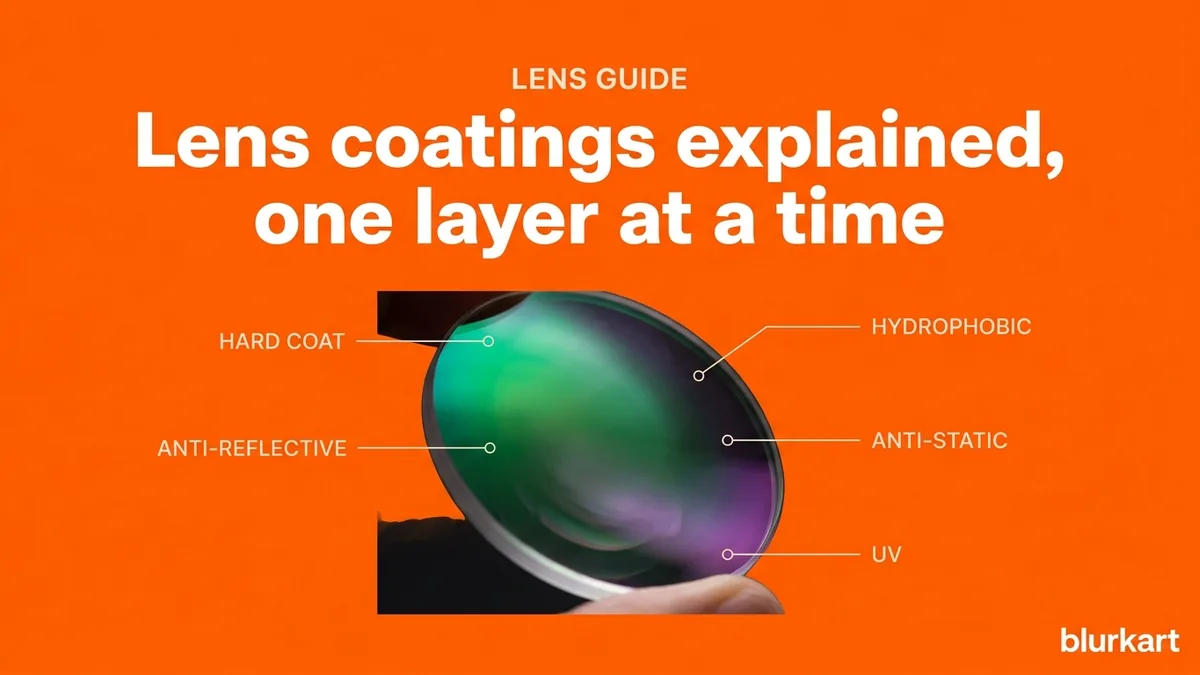
Shops sell lens coatings as a single word and a single price, which hides the fact that a modern lens carries several different layers doing completely different jobs. Knowing which is which tells you what you are paying for.
The lens coatings on a typical pair
Hard coat. A thin, very hard layer on both surfaces that resists scratching. Plastic lenses are soft, so this is standard rather than an extra. On polycarbonate, which is softer still at the surface, it is genuinely necessary.
Anti-reflective. Multiple microscopically thin layers that cancel reflections so light passes through instead of bouncing. This is the layer you actually notice. It stops headlights smearing into starbursts at night, stops office tubes reflecting off the back of the lens into your own eye, and makes your eyes visible to other people rather than hidden behind two white discs.
Hydrophobic. A slick outer layer that water and oil will not cling to. Rain beads and runs off, fingerprints wipe away with one pass instead of smearing around.
Anti-static. Stops the lens holding a charge, so dust is less attracted to it. In Kathmandu this does more work than it sounds like.
UV. Blocks ultraviolet through a clear lens. This is separate from tint, and worth understanding: a clear lens can block UV, and a dark lens might not. The UV400 guide explains why that matters.
Which ones matter here
If you buy one upgrade, buy anti-reflective. It is the layer with a noticeable, daily effect, and it is the difference between finding night driving tiring and not thinking about it. Anyone on a screen for hours gets the same benefit indoors.
Anti-static earns its place in this city specifically. Dust is the reason people wipe their glasses ten times a day, and every dry wipe is a small scratch. A lens that attracts less dust gets wiped less.
Hydrophobic matters most in monsoon, when the alternative is peering through beaded water on the way to work.
What it costs at Blurkart
A single vision lens with a blue coat is NPR 750. The multi-coated version at NPR 1,800 is the one that includes the proper anti-reflective stack, and it is what we recommend for most people. The fully digital blue filter lens is NPR 2,990, surfaced to your prescription rather than coated over a stock blank.
Worth being honest about one thing: the blue filtering part of these lenses is oversold across the whole industry. Most of the comfort people report comes from the anti-reflective layer, not the blue filter. We wrote about that in whether blue light glasses actually work.
How to not destroy them
Coatings fail from heat and abrasion. Glasses left on a dashboard or a window ledge in May will craze into a web of fine lines, and that is not repairable. Wiping a dry, dusty lens grinds grit through the coating.
Rinse under running water first, one drop of dish soap, then a clean microfibre cloth. That is the whole method, and the cleaning guide goes further. A crazed or peeling coating that failed on its own inside the first year is a defect and we replace it.
If you are choosing lenses now, come to either showroom and we will show you a coated and an uncoated lens side by side under a lamp. It is more convincing than any description. Frames start at NPR 999 in the eyeglasses range.
What to ask when you are quoted a price
Ask which coatings are included, by name, rather than accepting the word coated. There is a real difference between a single hard coat and a multi-layer anti-reflective stack, and both get sold under the same vague description in plenty of shops.
Ask whether the anti-reflective is included or extra, because that is the layer with the daily effect. Ask what the warranty is on the coating specifically, since a coating that crazes on its own inside a year is a defect rather than wear.
Then compare two quotes on those answers rather than on the headline number. Two shops quoting the same price for a lens can be selling quite different products, which is the whole point of why glasses cost different prices.
Frequently asked
- Which lens coating is worth paying for?
- Anti-reflective, by a distance. It is the layer that stops headlights smearing at night and stops office lights bouncing off the back of the lens into your eye. Our multi-coated lens at NPR 1,800 includes it.
- Do coatings wear off?
- They can, usually from heat or harsh cleaning. Leaving glasses on a dashboard, wiping them dry with a shirt, or using household glass cleaner all shorten a coating's life. Rinse first, then a drop of dish soap.
- Coating lagauda ke farak parchha?
- Sabai bhanda thulo farak anti-reflective le pardachha, rati gaadi chalauda ra screen herda aankha kam thakchha. Blue coat lens NPR 750 ra multi-coated NPR 1,800 ma paincha.