
How to clean glasses without scratching them
Rinse the lenses under lukewarm tap water first to wash off dust, put a drop of plain dish soap on each lens, rub gently with your fingers, rinse again, then dry with a clean microfibre cloth. Never wipe a dry lens, and never use tissue, a shirt hem or hot water.
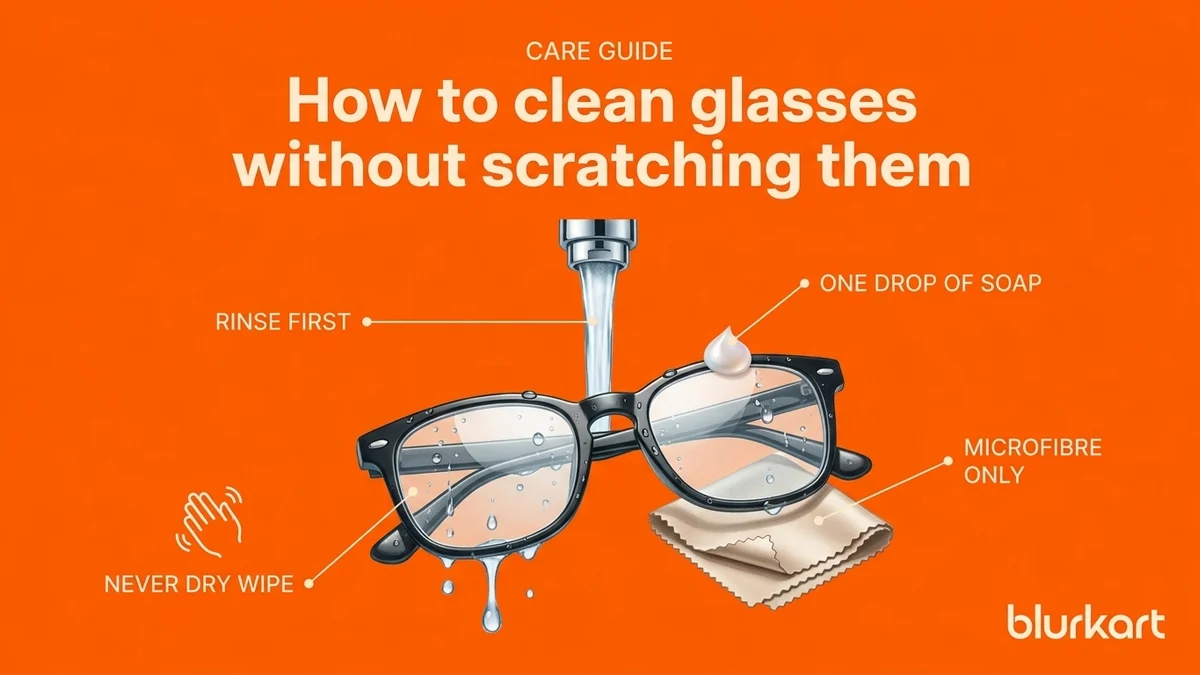
To clean glasses without scratching them, rinse before you wipe. Bring a pair of glasses to our counter with a haze of tiny scratches across both lenses and we can usually guess the story. Motorbike through Kalanki, dust on the lens, then a quick wipe with the shirt. Every wipe drags grit across the coating. Six months later the lenses look like frosted glass in headlights.
The right way to clean glasses is not a product. It is the order you do things in.
Rinse first, always
Dust is the enemy, not fingerprints. Before any cloth touches the lens, hold the glasses under a running tap. Lukewarm, not hot. Hot water can soften the adhesive layer under an anti-reflective coating and cause it to craze.
Ten seconds of water carries off the sand and road dust that would otherwise become sandpaper under your cloth. This one habit prevents most of the scratches we see.
Soap, fingers, rinse
Put one drop of plain dish soap on each lens. Not hand soap with moisturiser, not shampoo. Rub gently with your fingertips, including the nose pads and the hinges where skin oil collects. Rinse again until the water sheets off cleanly.
This removes the oil that sprays and wipes only smear around. If your lenses always look cloudy an hour after cleaning, oil from the nose pads is why.
Dry with microfibre, nothing else
Shake off the water and dry with a clean microfibre cloth. Not tissue, which is made of wood fibre and is abrasive. Not a towel. Not the corner of your kurta.
The word clean matters. A microfibre cloth that lives in your pocket next to keys and coins is full of grit. Wash it every couple of weeks with normal detergent, no fabric softener, and let it air dry. Softener coats the fibres and they stop absorbing. Keep two cloths and rotate them.
What to do in the monsoon
Monsoon grime is a mix of dust, water and diesel. It dries into a film that a cloth just pushes around. Soap is the answer, and rinsing more often. Keep a small dish soap bottle at your desk if your commute is on a bike.
Fogging is the other monsoon problem. Our post on caring for your glasses covers anti-fog options; and fixes for fogging glasses has the ranked list. The short version is that a clean lens fogs less than a greasy one.
Things that quietly ruin lenses
- Leaving glasses lens-down on a table. Always fold them and lay them lens-up, or put them in the case.
- The dashboard of a car in summer. The heat warps acetate frames and cracks coatings.
- Hand sanitiser. A wipe now and then is fine; daily use dulls anti-reflective coatings.
- Toothpaste to "polish" a scratch. It removes coating, not the scratch.
- Glasses on top of your head. Stretches the temples and drops them into your hair oil.
When the scratches are already there
A scratch in a coating cannot be polished out. Anyone who tells you otherwise is about to remove your coating. What we can do is replace the lenses in your existing frame. Single vision starts at NPR 750 for a blue coat lens and NPR 1,800 for the multi-coated version, and the frame stays the one you like. The whole thing is usually ready in a couple of days.
If the frame is also tired, a fresh pair like the Premium Rectangle Frame at NPR 1,200 with new lenses is not a big bill, and we will adjust it to your face before it leaves the shop.
The 30-second routine to clean glasses properly
Cleaning chasma in Kathmandu: the local problems
Three things about the Valley make lens care harder than the generic advice admits.
Dust season, October to May. Fine dust settles on lenses within an hour outdoors, and it is the grit that scratches when wiped dry. Rinse more often, not less: a quick tap rinse at the office is better than one careful clean at night.
Water quality. Some tap and tank water in Kathmandu leaves mineral spots as it dries. If your lenses show white specks after rinsing, dry them straight away with the cloth rather than letting them air dry, or use filtered water for the final rinse.
Two-wheeler commutes. Helmet visors scratch lenses when the glasses are pushed up under them. Take the glasses off before the helmet goes on, or wear a full-face helmet with room for frames.
None of this needs a product. A NPR 50 microfibre cloth and the tap do the whole job.
Rinse. Soap. Rub. Rinse. Microfibre. That is it. Do it every morning and your lenses will still be clear when your prescription changes, which is the right time to replace them, not before.
Frequently asked
- Can I use hand sanitiser or alcohol on my lenses?
- Not regularly. Alcohol can weaken anti-reflective coatings over time. Soap and water do the job without the risk.
- Why do my lenses look smeared after I wipe them?
- Usually oil from the nose pads and skin spread by a cloth that is already dirty. Wash the lenses with soap first, then use a clean cloth.
- Can scratched lenses be repaired?
- No. A scratch in the coating cannot be polished out, and the toothpaste trick removes more coating. Replacement single vision lenses start at NPR 750 and we can fit them into your existing frame.
- How often should I clean my glasses?
- Once a day with water and soap, and a rinse whenever they get dusty. In Kathmandu traffic that can be twice a day.
- Chasma safa garne sahi tarika ke ho?
- Rinse under tap water first, rub a drop of dish soap over the lenses with your fingers, rinse again, then dry with a clean microfibre cloth. Never wipe a dry lens and never use tissue or a shirt.