
Scratched lenses: can they be repaired?
Scratched lenses cannot be repaired. A scratch is missing material, and polish, toothpaste, baking soda or wax either remove more coating or fill the groove temporarily while adding haze. Replacement lenses in your existing frame start at NPR 750, which is cheaper than most people assume.
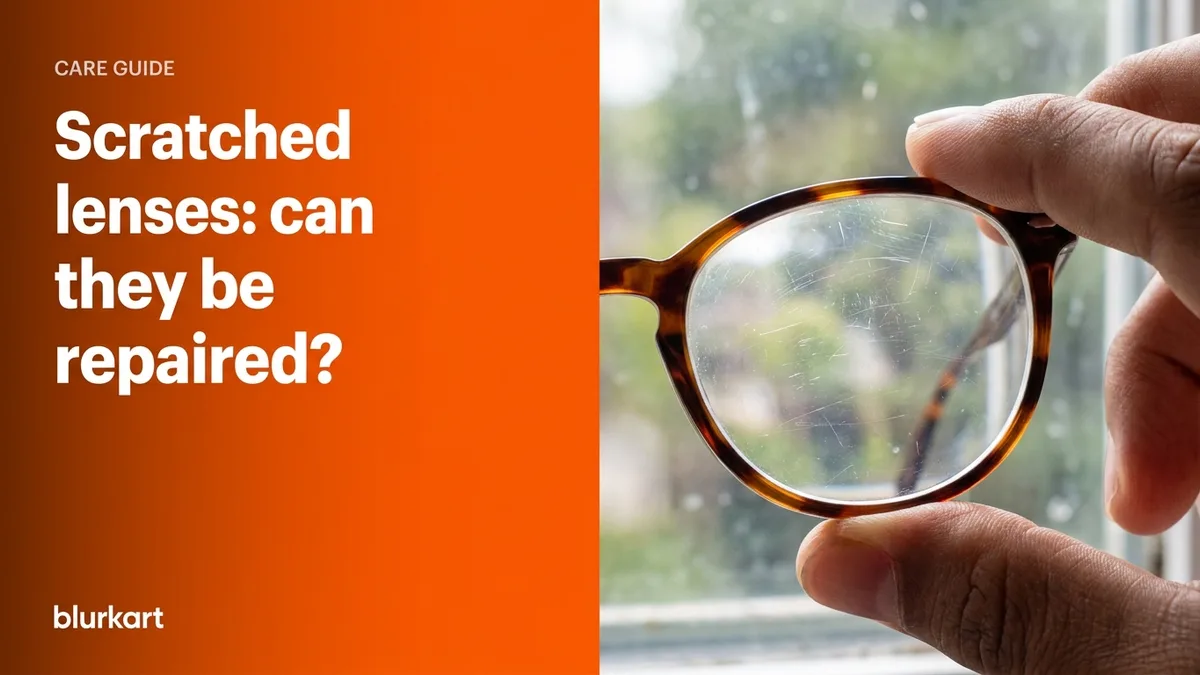
Scratched lenses are the most common thing people bring to our counter hoping for a fix, and we have to give the same answer every time. They cannot be repaired. It is worth explaining why, because the internet is full of remedies that actively make it worse.
Why scratched lenses cannot be repaired
A scratch is not a mark sitting on the surface. It is a groove where material has been removed, taking the coatings with it.
A modern lens is layered: the lens material, then a hard coat, then the anti-reflective stack, then a hydrophobic top layer. A scratch cuts through some or all of those. There is no process that puts material back into a groove and rebuilds a multi-layer coating on top.
Polishing does not restore it either. Polishing removes more material around the scratch until the surface is level again, which on a prescription lens changes the optics. Take enough off and the power is no longer the power you were prescribed.
Why the home remedies make it worse
Toothpaste. The most repeated suggestion and a genuinely bad one. Toothpaste is a mild abrasive built to polish tooth enamel. Rubbed on a lens it strips coating and replaces one visible scratch with thousands of microscopic ones. The lens looks marginally better for a day because the edges of the scratch are dulled, then it hazes permanently.
Baking soda. Same problem, coarser.
Car wax or furniture polish. These fill the groove so light passes through more evenly, which genuinely does reduce the appearance for a few hours. Then it collects dust, smears, and you are cleaning a greasy lens with a scratch still in it.
Scratch removal kits. Designed for uncoated plastic like headlight covers. On a coated spectacle lens they remove the anti-reflective layer unevenly, leaving patches that look worse than the original scratch and reflect badly at night.
If any of these worked, opticians would sell the service. Nobody does.
What it actually costs to fix properly
New lenses in your existing frame, which is cheaper than people expect because you are not buying a frame.
At Blurkart a single vision lens with a blue coat is NPR 750, multi-coated is NPR 1,800, and the fully digital blue filter is NPR 2,990. Progressives run NPR 1,900 to NPR 5,500. That is the whole bill if the frame is sound. New lenses in your old frame covers when a frame is too tired to survive re-lensing.
This is also the right moment to upgrade the coating rather than repeat what you had, particularly if the old lenses had no proper anti-reflective layer.
When a scratch actually matters
Not every scratch needs acting on. A fine mark near the edge of the lens, outside where you look, is cosmetic and you will stop noticing it.
Replace when a scratch sits in your line of sight, when you find yourself tilting your head to see past one, when night driving has developed new starbursts, or when the lens has hazed generally rather than carrying one clean mark. That haze is usually accumulated fine scratching from dry wiping, and it scatters light in a way that genuinely tires your eyes.
Not getting there again
Almost every scratch starts the same way: wiping a dry, dusty lens. Kathmandu dust is gritty, and dragging it across a coating with a shirt hem is sandpaper at a small scale.
Rinse under running water first, one drop of dish soap, then a clean microfibre cloth. Never face down on a table. Case rather than pocket. The full cleaning method takes two minutes to read and saves a lens.
Bring the frame to either showroom and we will tell you honestly whether it is worth re-lensing. Frames start at NPR 999 if it is not.
Deciding whether to replace now
Hold the glasses at arm's length against a plain bright background and look at the lens rather than through it. Scratches in the middle third, where you spend most of your day looking, are the ones that matter. Marks near the rim rarely are.
Then look through them at a light at night. If a scratch throws a visible flare across your view, it is affecting your driving whether you had noticed or not, and that moves it from cosmetic to worth fixing.
Frequently asked
- Does toothpaste really fix scratched glasses?
- No. Toothpaste is a mild abrasive designed to polish enamel. On a lens it removes coating and replaces one visible scratch with thousands of small ones, so the lens hazes instead. It looks slightly better for a day, then worse permanently.
- Can the coating be reapplied?
- Not on a lens already in use. Coatings are applied during manufacture in controlled conditions. A lens with damaged coating needs replacing, which is the lens price only if the frame is sound.
- Lens ma daag paryo, banauna milchha?
- Milddaina. Dagh bhaneko lens ko bhag nai jhareko ho, tyo firta aaudaina. Manjan ya soda le jhan bigarchha. Naya lens purano frame mai NPR 750 dekhi halna sakinchha.