
Why Lenses Reflect Green, Blue or Purple: AR Coating Colours
The faint green, blue or purple tint you see on coated lenses is the residual reflection of the anti-reflective coating. The colour itself is mostly cosmetic and does not indicate quality on its own. What matters is how well the coating reduces glare, resists scratches and smudges, and whether it suits your use.
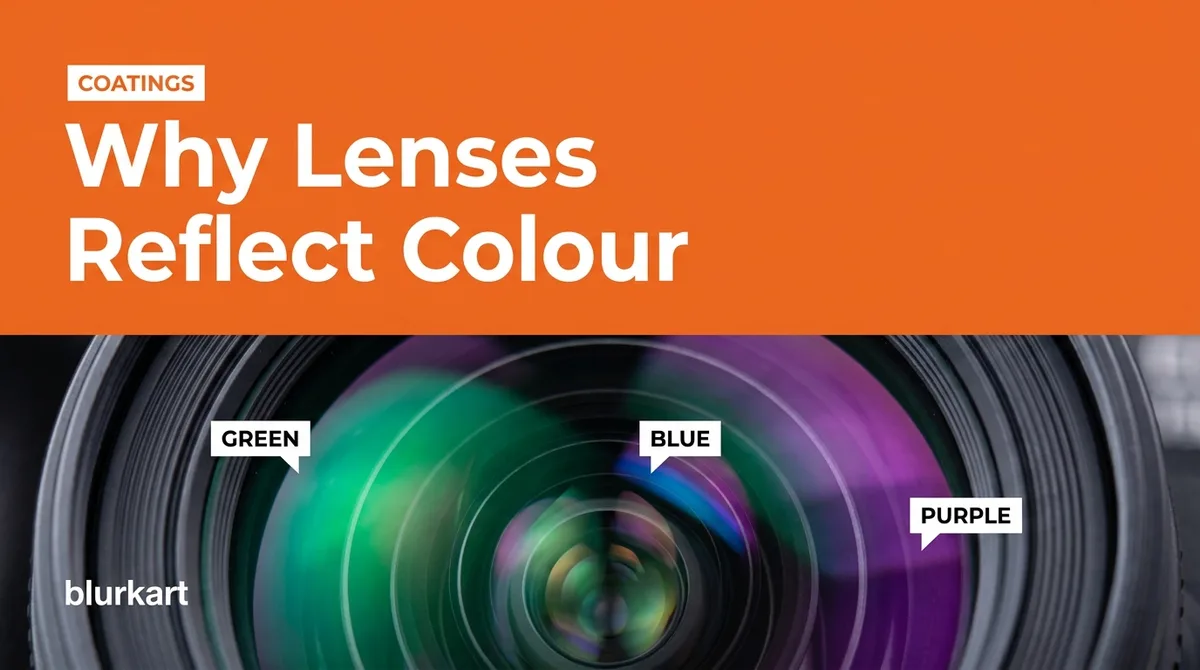
That mysterious green sheen
Hold your glasses up to the light and you may notice a faint green, blue or purple sheen across the lenses. People often wonder if something is wrong, or if it means the coating is cheap or premium. In fact, that colour is simply your anti-reflective (AR) coating doing its job, and the colour tells you less than you might think.
Where the colour comes from
An AR coating is a set of ultra-thin layers designed to cancel reflections so more light passes through the lens to your eye. No coating can cancel every wavelength of light perfectly, so a small amount is still reflected, and what remains has a colour. That residual reflection is the green, blue or purple you see. It is a sign the coating is present and working, not a fault.
The sheen is the leftover reflection the coating could not cancel. A little colour is normal; a mirror-bright reflection would mean no AR coating at all.
Does the colour mean anything?
Mostly, it is cosmetic. The residual colour is partly a design choice by the coating maker and does not, on its own, tell you the coating is good or bad. What actually matters is performance:
- Glare reduction: how well it cuts reflections for you and for people looking at you.
- Scratch resistance: how well it survives daily cleaning and handling.
- Smudge and water resistance: how easily it sheds fingerprints and rain.
- Durability: how long before it wears or peels.
Common residual colours
| Residual colour | What it tells you |
|---|---|
| Green | Very common; mostly cosmetic |
| Blue | Common; often on blue-filter coatings |
| Purple or gold | Design choice; not a quality grade |
| Strong mirror, no colour | Likely no AR coating at all |
When the colour does matter: photos and video
There is one practical case. A stronger residual reflection can show up on camera, giving glare on your lenses in photos and on video calls, which can hide your eyes. If you are often on camera, a premium coating with a fainter residual reflection gives a cleaner look. This is about appearance on camera, not about your own vision.
What to ask in Nepal
Do not choose a coating by its colour alone. Ask how well it resists scratches and smudges, whether it has good glare reduction, and what warranty covers peeling. If you spend time on video calls, mention it and ask for a premium AR coating with a low residual reflection. Judge the coating by how it performs every day, not by the pretty sheen it leaves in the light.
Why blue-filter coatings often look blue
If your lenses throw a distinctly blue reflection, they may carry a blue-light-filtering coating, which by design reflects some blue light and so leaves a bluer residual sheen. That is the coating doing its stated job, not a defect. As always, judge it on performance and comfort rather than the colour alone, and decide whether you actually want a blue filter for your screen habits.
Cleaning keeps the coating looking right
A well-made coating can still look smeary if it is dirty or lightly scratched from poor cleaning. Rinse before wiping, use a microfibre cloth and proper lens spray, and the residual colour stays even and subtle rather than patchy. If the sheen starts to look blotchy or rainbow-like in patches, that is a sign of early crazing from heat or harsh cleaning, not just the normal residual colour.
Shop the lenses mentioned in this guide
- Essilor Crizal Easy Pro 1.50 Blue UV Capture – Single Vision FSV (Pair): an everyday AR coating with a blue light and UV filter
- Essilor Crizal Rock 1.56 – Single Vision FSV, Clear or Blue UV Capture (Pair): a tougher, scratch-resistant AR coating
- Essilor Crizal Prevencia 1.56 – Single Vision FSV, Light Scan (Pair): a premium coating for people on screens and video calls
- ZEISS ClearView 1.56 UVProtect – Single Vision FSV, DuraVision Platinum UV (Pair): a lens with ZEISS DuraVision Platinum coating
Keep reading
- Anti-reflective coating: is it worth the extra NPR?
- Lens coatings explained, one layer at a time
- Video call glare: stopping your glasses reflecting the screen
- ZEISS DuraVision Coatings: Gold, Platinum, Silver, Chrome
Not sure which lens suits you? Book a free eye test at our Pulchowk or Boudha branch.
Frequently asked
- Why do my glasses have a green or blue tint in reflections?
- That colour is the small amount of light the anti-reflective coating still reflects. AR coatings cannot eliminate every wavelength equally, so a faint residual colour, often green, blue or purple, remains. It is normal and expected on coated lenses.
- Does the reflection colour show the coating quality?
- Not by itself. The colour is mostly a design and cosmetic choice. Quality is better judged by how well the coating cuts glare, resists scratches and smudges, and how durable it is, not by whether it looks green or blue.
- Which AR coating colour is best?
- There is no single best colour. Some people prefer a fainter residual reflection so their eyes are more visible in photos and on video calls. Others do not mind. Choose based on performance and your own preference.
- Does the colour affect what I see through the lens?
- No. The residual colour is in the reflection others see, not in your view through the lens. Your vision and the colours you perceive are not tinted by it.
- Can I get a coating with less visible reflection?
- Yes. Premium coatings often have a fainter residual reflection and better glare, scratch and smudge resistance. If a clean look on camera matters to you, ask for a premium AR coating.