
ZEISS DuraVision Coatings: Gold, Platinum, Silver, Chrome
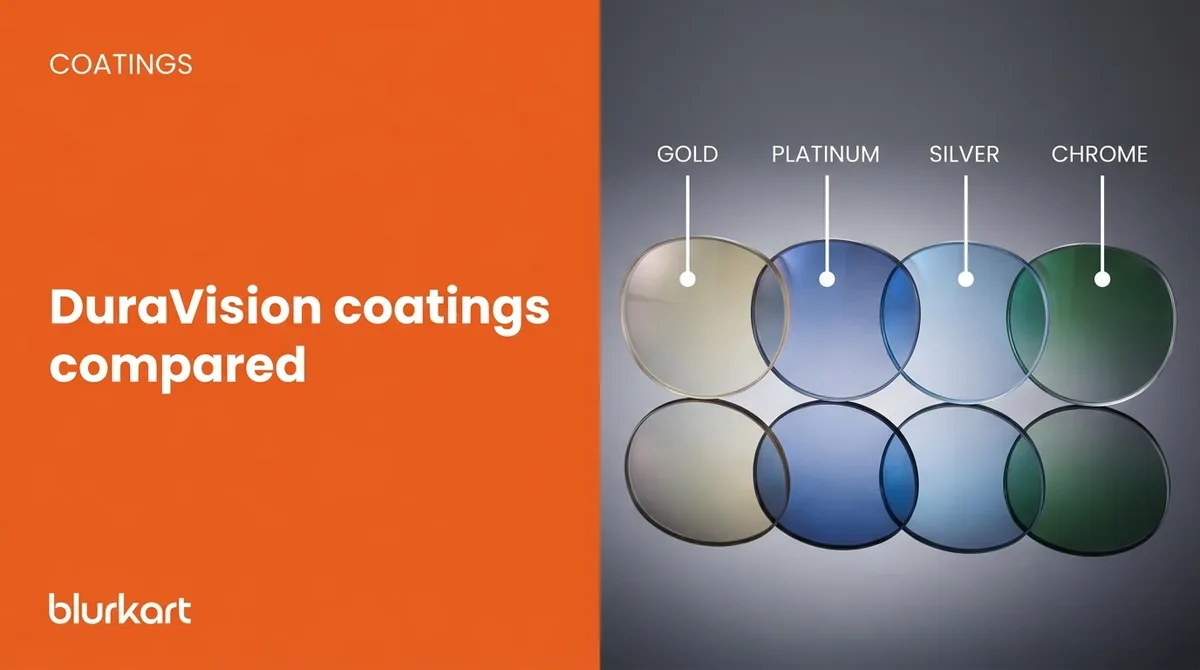
ZEISS DuraVision is a family of anti-reflective coatings. Gold UV is the newest premium option, Platinum UV is a high-clarity coating with a blueish reflex, Silver UV sits between, and Chrome UV is the budget-friendly one with a faint green reflex. The newer DuraVision Plus range adds CleanGuard, which ZEISS says cleans up to three times faster.
Quick answer
ZEISS DuraVision is a family of premium anti-reflective coatings: Gold UV (newest premium), Platinum UV (high clarity), Silver UV and Chrome UV (budget-friendly). The newer DuraVision Plus range adds CleanGuard for easier cleaning.
A coating is a thin layer applied to the lens in a vacuum chamber. It looks like nothing, but it affects how clear your lenses look, how easily they scratch and how often you wipe smudges. ZEISS says it is considered the inventor of anti-reflective coatings.
What every DuraVision coating does
- Reduces reflections so lenses look almost invisible and your eyes are visible to others.
- Resists scratches: ZEISS says the coatings reach high Bayer ratings, a standard test for scratch resistance, and are hardened by ion bombardment during manufacture.
- Repels water and oil for easier cleaning.
- Reduces UV reflections from the back surface of the lens.
The premium anti-reflective range
| Coating | Residual reflex | In short |
|---|---|---|
| Gold UV | Golden | The latest and most premium; ZEISS says it cleans up to three times faster than earlier coatings |
| Platinum UV | Blueish | High clarity, durability and long-lasting cleanability |
| Silver UV | Arctic blue | Strong all-round option |
| Chrome UV | Greenish | Durable and budget-friendly with high clarity |
The 'residual reflex' is the faint colour you see when the lens catches light. It is not a flaw, just a signature of the coating.
What DuraVision Plus adds
The Plus range, including Plus Platinum UV, Silver UV and Chrome UV, adds CleanGuard technology, which makes the lens surface more water and oil repellent. ZEISS says lenses clean up to three times faster compared with previous ZEISS coatings and have an enhanced residual reflex that makes the wearer's eyes more visible.
Special-purpose coatings
- BlueProtect UV: for blue-violet light from screens and LEDs.
- DriveSafe UV: for night driving, available only with DriveSafe lenses.
- Sun UV, Mirror UV and Flash UV: for sunglasses and tinted lenses.
- AntiVirus Platinum UV: an antimicrobial coating that ZEISS says kills 99.9% of viruses and bacteria on the lens surface.
Which should you choose?
- If you want the best clarity and easiest cleaning, go for Gold or Platinum.
- If you need a durable, sensible coating on a budget, Chrome is a good choice.
- If you drive at night or use screens all day, consider a functional coating that matches your routine.
Coatings are one of the best-value upgrades on any pair of glasses. Book a free eye test at Blurkart and ask us to show you the difference.
Information is based on ZEISS coatings documentation. Coating names and availability vary by market.
Frequently asked
- What does an anti-reflective coating do?
- It reduces reflections on the lens surfaces, so more light passes through, vision looks clearer and other people can see your eyes behind the lenses.
- What is the difference between Platinum and Chrome?
- Both are anti-reflective. ZEISS describes Platinum as a premium coating with a blueish residual reflection, high clarity and long-lasting cleanability, and Chrome as a durable, budget-friendly coating with a delicate green reflection.
- What is DuraVision Plus?
- It is an expanded range that incorporates ZEISS CleanGuard technology, which makes lenses water and oil repellent. ZEISS says Plus coatings clean up to three times faster than previous ZEISS coatings.
- Are there special-purpose coatings?
- Yes. ZEISS offers BlueProtect for blue light, DriveSafe for night driving, and Sun, Mirror and Flash coatings for sunglasses.
- Do coatings protect against UV?
- ZEISS says lenses with DuraVision coatings have UV protection on both the front and the back of the lens.