
Night Driving Glare: How Specialised Driving Lenses Help
Night-driving glare comes from scattered light hitting your eyes from headlights and streetlights, made worse by reflections inside your lenses. Driving-specific lenses use advanced anti-reflective coatings and a design tuned for low light to cut halos and improve contrast. Clear or yellow 'night driving' glasses are mostly marketing.
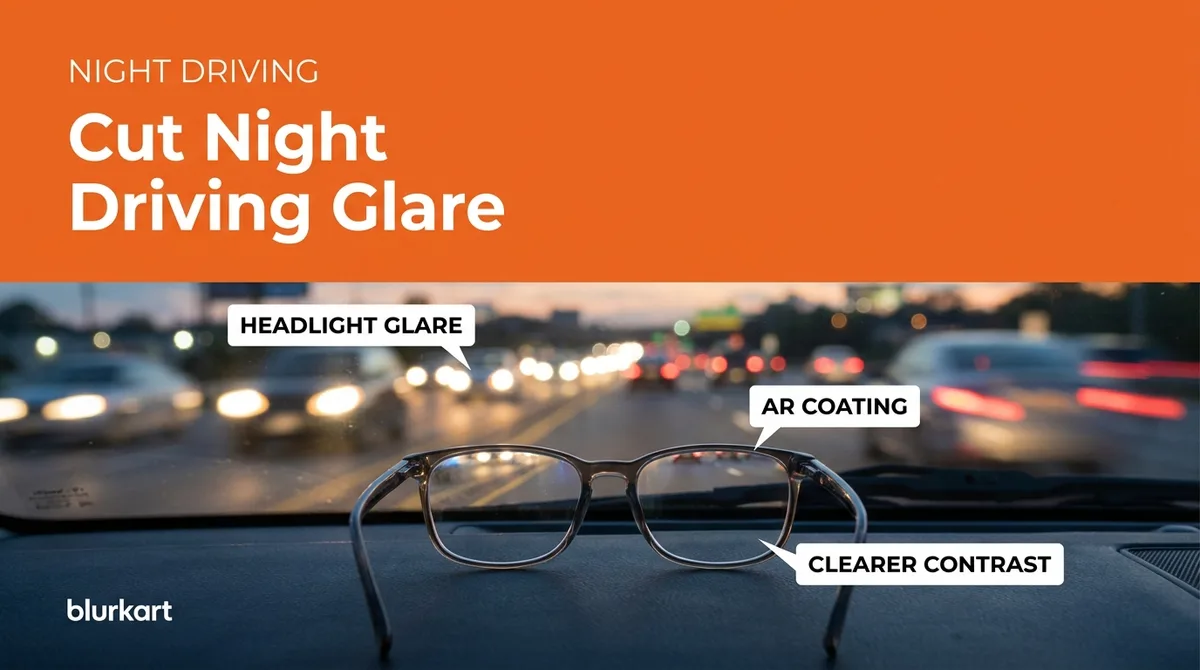
Why headlights feel blinding
At night your pupils widen to let in more light. That is helpful for seeing a dark road, but it also means any bright source, an oncoming headlight, an LED streetlight, a glowing shop sign, sends a flood of light into a wide-open eye. Some of that light scatters inside the eye and across the surfaces of your lenses, spreading into the halos and starbursts that make night driving stressful and tiring.
On Nepal's roads, with a mix of poorly aligned headlights, bright aftermarket LED retrofits and uneven street lighting, this is a genuine safety issue, not just a comfort complaint. A driver who is wincing at every oncoming vehicle is a driver who is not watching the edges of the road.
The biggest fix is the one people skip: coating
Here is the part most people do not realise. A spectacle lens without an anti-reflective coating bounces light around its front and back surfaces. At night, that produces ghost images and reflections of the lights behind and beside you, smeared right across your field of view.
A premium anti-reflective (AR) coating dramatically cuts those internal reflections. If you do a lot of night driving and your current lenses have no AR coating, or a cheap one that is already peeling, upgrading the coating is the single most effective change you can make. It costs far less than most people expect for the difference it makes.
Before buying any special 'night' product, make sure your lenses are clean, scratch-free, up to date, and carry a good anti-reflective coating. That alone solves most complaints.
What driving-specific lenses add
Driving lenses go a step beyond a standard lens with AR. They are designed with low-light conditions in mind, the exact situation where your pupil is large and you are leaning on the edges of the lens to scan the road, the mirrors and the junctions. Typically they offer:
- An advanced anti-reflective layer tuned to reduce the perception of glare from headlights.
- A lens design optimised for the larger pupil size you have at night.
- Cleaner peripheral vision for checking mirrors and side roads.
The result is not magic. Oncoming lights are still bright. But halos are smaller, contrast is better, and your eyes work less hard over a long drive, which is the difference you feel in your shoulders and neck after two hours on the highway.
Myth versus fact
| Claim | Reality |
|---|---|
| Yellow lenses help you see at night | They cut light, which is the opposite of what you need |
| Any anti-glare sticker is enough | Coating quality varies hugely; a premium AR is what matters |
| Glare is just part of getting older | Often fixable, but new glare can signal cataract |
| Brighter car headlights fix the problem | They can worsen glare for oncoming drivers, including you |
A simple step-by-step to calmer night vision
- Clean your lenses properly and check for scratches.
- Confirm your prescription is current with an eye test.
- Make sure your lenses have a good anti-reflective coating; upgrade if not.
- If you still struggle, consider a dedicated driving lens design.
- Keep your windscreen clean inside and out, because it scatters light too.
The yellow-glasses myth
You will see cheap clear or yellow-tinted glasses marketed as 'night driving glasses'. Skip them. Any tint reduces the amount of light reaching your eyes, and at night you want more usable light, not less. Research has repeatedly failed to show a safety benefit, and worse, they can give a false sense of security that makes a driver less cautious. The real tools are an accurate prescription, a clean lens, and a quality AR coating.
First, rule out cataract
If your night glare is new, or clearly getting worse year on year, do not just buy new lenses. Worsening glare and halos at night are among the earliest signs of cataract, which is extremely common with age in Nepal. Book an eye test. If the eyes are healthy, the right driving lens will help. If they are not, you will have caught something important early, while it is easy to treat.
Who benefits most
Drivers who commute after dark, long-distance highway drivers, two-wheeler riders exposed to full headlight glare, and anyone over about 45 who has started to notice more halos. If that is you, start with an AR-coated, up-to-date prescription, then consider a dedicated driving lens for the clearest, calmest night vision you can get.
Frequently asked
- Do yellow night-driving glasses work?
- No. Clear or yellow-tinted 'night driving' glasses reduce the total light reaching your eyes, which is the opposite of what you want in the dark. Studies have not shown a real safety benefit. A good anti-reflective coating is far more useful.
- What actually reduces headlight glare at night?
- A high-quality anti-reflective coating on an accurate, clean prescription lens. Driving-specific lens designs add a low-light tuning that helps reduce reflections and halos from oncoming lights.
- Can my normal glasses be making night glare worse?
- Yes. Scratched lenses, a lens without anti-reflective coating, or an outdated prescription all scatter more light and increase glare. Clean, coated, up-to-date lenses are the first fix.
- When should I see an eye doctor about night glare?
- If glare and halos have appeared recently or are getting worse, get an eye test. Early cataract commonly shows up first as worsening night glare, and no lens can fix that, but treatment can.
- Are driving lenses only for night?
- No. Driving lens designs also help in daytime by reducing glare off wet roads and other vehicles, and they keep peripheral vision clean for mirrors and junctions. They are a good all-round choice for people who drive a lot.