
Progressive Lenses and Frame Choice: Why Height and Shape Matter
Progressive lenses need vertical room for their distance-to-near corridor. Very shallow or tiny frames cramp the reading zone and make adaptation harder. Choose a frame with enough lens height, a stable fit, and adjustable nose pads or good bridge fit, and have it fitted carefully.
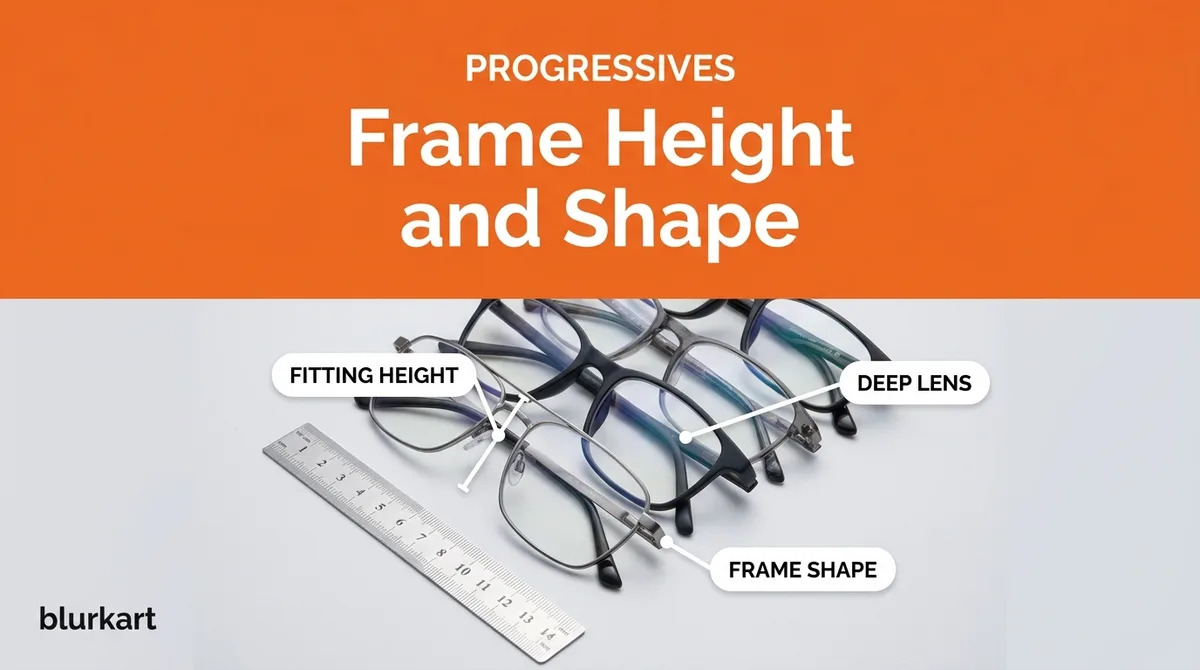
The best lens can still disappoint
People spend carefully on a premium progressive lens, then pick whatever frame catches their eye, and wonder why the reading vision feels cramped. The lens is only half the story. With progressives, the frame is part of the optics, and the wrong frame can undo an excellent lens.
Why height is king
A progressive lens needs vertical room. The power changes gradually from distance at the top to near at the bottom, through an intermediate zone in between. Squeeze that into a very shallow or tiny frame and there is simply not enough height for the reading zone, so close vision ends up pinched and frustrating.
Think of the progressive corridor like a staircase. A short frame gives you too few steps between distance and reading.
Modern freeform designs are better at fitting smaller frames than older ones, but there is still a minimum height below which comfort suffers.
Shape and fit matter too
- Shape: deeper lens shapes preserve more reading area; very shallow or sharply swept shapes lose some of it.
- Stability: a frame that slides down your nose moves your eyes out of the corridor, blurring everything. A secure fit keeps the zones where they belong.
- Adjustability: adjustable nose pads or a well-matched bridge help hold the lens at the right height. See why glasses slide down and the bridge that fixes it.
- Tilt and wrap: how the frame sits and curves affects the usable field; a good optician accounts for this.
Frame choice at a glance
| Feature | Good for progressives | Risky for progressives |
|---|---|---|
| Lens height | Enough depth for all zones | Tiny or very shallow frames |
| Fit | Stable, stays put | Slips down the nose |
| Bridge/pads | Adjustable or well matched | Loose, non-adjustable |
| Shape | Rounder, deeper | Sharp, sliver-thin shapes |
Why the fitting appointment counts
Progressives are centred to your pupils in the exact frame you will wear. The fitting height and alignment must be measured on you, in that frame, as it actually sits. A rushed or guessed fit can place the reading zone too high or too low, wasting even a top-tier lens. Insist on a proper measurement, not a generic estimate.
Buying in Nepal
Pick your lens design for your needs first, then choose a frame that suits it: enough height, a stable fit, and a shape you also happen to love. If you have your heart set on a very small frame, ask whether it can take progressives before you buy, and be ready to compromise on size for the sake of comfortable reading. A good optician will tell you honestly, and the result is glasses that work as well as they look.
Frames to be cautious with
- Very shallow or tiny frames: not enough height for a comfortable reading zone.
- Loose frames that slip: they drag your eyes out of the corridor and blur everything.
- Strongly wrapped sports shapes: fine for some designs, but mention your Rx first.
- Non-adjustable bridges on a poor fit: hard to hold the lens at the right height.
A quick checklist before you buy
- Does the frame have enough vertical height for progressives? Ask the optician to confirm against your eyes.
- Does it sit stably without sliding down your nose?
- Can the fit be adjusted to hold the lens at the right level?
- Has the fitting height been measured on you, in this frame?
Tick those four and even a fashionable frame can carry progressives well. Skip them, and the best lens in the world will still disappoint.
Shop the lenses mentioned in this guide
- Essilor Varilux Comfort Max Crizal Rock – Progressive Lens (Pair): a premium progressive that rewards a well-fitted frame
- ZEISS Progressive SmartLife Plus 1.5 – DuraVision Platinum UV (Pair): a ZEISS freeform progressive for everyday wear
- Eyeglass frames: browse frames and check the lens height with your optician
Keep reading
- Why glasses slide down, and the bridge that fixes it
- How to Choose the Right Frame Shape for Your Face
- Switching From Single Vision to Progressives: What to Expect
- Progressive Lens Tiers Compared: Standard, Premium and Elite
Not sure which lens suits you? Book a free eye test at our Pulchowk or Boudha branch.
Frequently asked
- Can progressive lenses go in any frame?
- Not well. Progressives need enough vertical lens height for the distance-to-near corridor. Very small or shallow frames cut into the reading zone, so some trendy tiny frames are a poor match. Many modern freeform designs cope with smaller frames, but there is still a minimum height.
- How much lens height do progressives need?
- It varies by design, but there is a minimum height below which the reading zone is too cramped. Your optician measures your eyes against the frame to confirm a given frame will work before you commit.
- Does frame shape affect progressive performance?
- Yes. The shape determines how much of the corridor and reading zone survives after the lens is cut to the frame. Deeper shapes keep more of the reading area; very shallow or sharply angled shapes lose some of it.
- Why does a careful fitting matter so much?
- Progressives are aligned to your pupils, so the fitting height and centration must be measured accurately for your frame as you actually wear it. A rushed fit can place the zones wrong, wasting even an excellent lens.
- Should I pick the frame or the lens first?
- Choose the lens design for your needs, then select a frame that suits it, with enough height and a stable fit. A good optician will tell you if a frame you love is unsuitable for progressives.