
Kathmandu winter sun is stronger than you think
Yes. Kathmandu sits at 1,400 metres, and clear winter skies from November to February let through more ultraviolet than the hazy monsoon months. The UV index is often 4 to 6 on a December afternoon, which is enough to matter over years. Low winter sun also shines straight into the eyes rather than down from overhead.
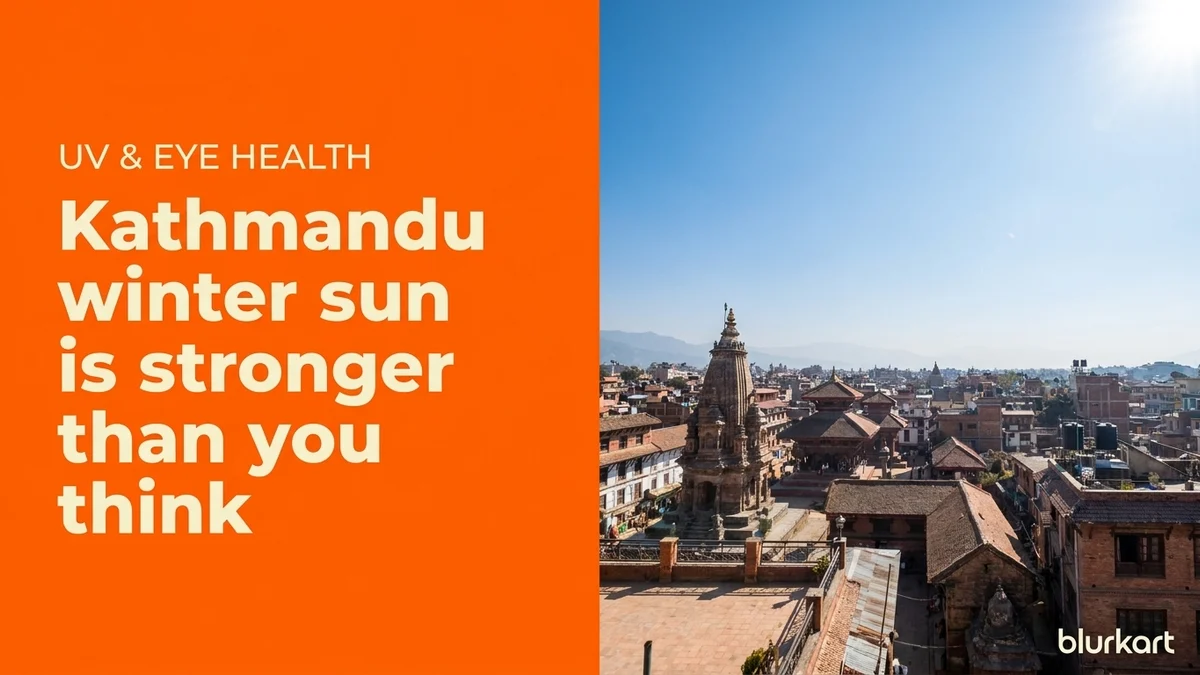
Kathmandu's winter sun is stronger than it feels. The Valley sits at 1,400 metres, the skies from November to February are the clearest of the year, and the sun sits low enough to shine straight into your eyes rather than onto the top of your head. A December afternoon here often reads a UV index of 4 to 6, which is the same range that has people wearing sunglasses in a European summer. Most people in the Valley wear none.
Why altitude matters
Ultraviolet is filtered by the air it passes through. Less air, less filtering. The rule of thumb is a 10 percent increase in UV for every 1,000 metres, so Kathmandu starts around 14 percent above sea level before the weather does anything. Pokhara at 800 metres is a little lower; anywhere on a trek is much higher.
Why the Kathmandu winter sun is not the safe season
People assume UV follows temperature. It does not. It follows the height of the sun and the clarity of the sky. The monsoon sun is higher but the sky is full of cloud and moisture. The winter sun is lower but the sky is dry and clear for weeks. The two roughly balance, so a clear January day carries more UV than most people expect and more than a hazy July one.
There is a second winter problem: angle. In summer the sun is overhead and your brow and lashes shade your eyes. In winter it is low, especially in the late afternoon, and it comes straight in under the brow. Driving west out of the city at 4 pm in December is the clearest example.
What years of it do to eyes
UV damage to eyes is slow and cumulative. The two conditions we see most in the Valley are cataracts, which cloud the lens inside the eye, and pterygium, a wedge of tissue that grows onto the cornea from the corner of the eye. Pterygium is so common among people who work outdoors here that many assume it is normal ageing. It is not; it is sun and dust, and it is preventable. Our post on why regular eye checks matter covers what a check catches early.
What the UV index means
| UV index | Level | What to do |
|---|---|---|
| 0 to 2 | Low | Nothing needed |
| 3 to 5 | Moderate | Sunglasses outside for more than an hour |
| 6 to 7 | High | Sunglasses and a cap; shade at midday |
| 8 and above | Very high | Treat like a trek: full coverage |
Most weather apps show the index for Kathmandu. Look at it for a week in December and the numbers will surprise you.
Five habits that cost nothing, and one that costs NPR 999
- Wear sunglasses when you would wear sunscreen. If the sun is bright enough to squint at, it is bright enough to matter.
- A cap with a brim blocks up to half the UV reaching the eyes from above and takes the low sun off your face.
- Shade at midday, 11 am to 2 pm, when the index peaks even in winter.
- Put sunglasses on children. Their eyes let more UV through to the retina than adult eyes do.
- Keep the pair in the bike or the car, not at home. A pair you do not have with you protects nothing.
The paid part: any UV400 pair does the job. Our cheapest, the Stella at NPR 999, blocks the same ultraviolet as our Icon Wayfarer at NPR 6,800. The difference is the frame, the lens quality and whether it is polarised, which is comfort rather than protection. What matters is UV400, and our post on what the sticker means explains how to check for it.
Winter sunglasses in Nepal: why so few people wear them
Walk down Pulchowk on a bright January afternoon and count the sunglasses. Very few. Three reasons come up when we ask customers.
"Jado ma sunglass lagaunu ajeeb lagchha." It feels odd because it is uncommon, and it is uncommon because it feels odd. Trekkers and drivers broke the habit years ago; the rest of the Valley is catching up.
"Ghaam ta chha tara garmi chhaina." The cold hides it. UV has no temperature, and a clear winter sky at this altitude carries plenty of it.
"Power chasma ma UV protection hunchha ki hundaina?" Most modern clear plastic lenses block the majority of UV even without a tint, which is one reason spectacle wearers get fewer sun-related eye problems. If you wear glasses all day, you are better protected than you think, and a photochromic lens closes the gap fully.
For everyone else, a NPR 999 UV400 pair in the bike or the bag, worn on bright days, is the whole habit.
If you already own a pair and are not sure it blocks anything, bring it to either Lalitpur showroom. The meter takes ten seconds and the check is free.
Frequently asked
- Is UV lower in winter because it is cold?
- Temperature and UV are unrelated. Winter UV is lower than May because the sun is lower in the sky, but clear skies and altitude keep it in the moderate range most afternoons.
- What is pterygium?
- A wedge of tissue that grows onto the cornea from the white of the eye, driven by years of UV and dust. It is very common among people who work outdoors in Nepal and it is preventable with sunglasses.
- Do children need sunglasses in winter?
- Yes, more than adults. A child's lens lets more UV through to the retina. Our kids' UV400 pairs start under NPR 1,500.
- Do prescription glasses block UV?
- Most modern plastic lenses block most UV even when clear. Ask for a UV-blocking lens or a photochromic one if you spend a lot of the day outside.
- Jado ma pani sunglass chahinchha?
- Yes on bright days. Kathmandu's winter UV index is often 4 to 6 in the afternoon because of altitude and clear skies, and the low sun shines straight into the eyes. Any UV400 pair does the job.