
Acetate vs metal vs TR90 frames: what lasts in Nepal
TR90 lasts best for hard daily use in Nepal: it is light, bends without breaking and does not corrode. Acetate looks best and adjusts well but is heavier and warps if left in a hot vehicle. Metal is thin and light but cheap alloys corrode with sweat within a year.
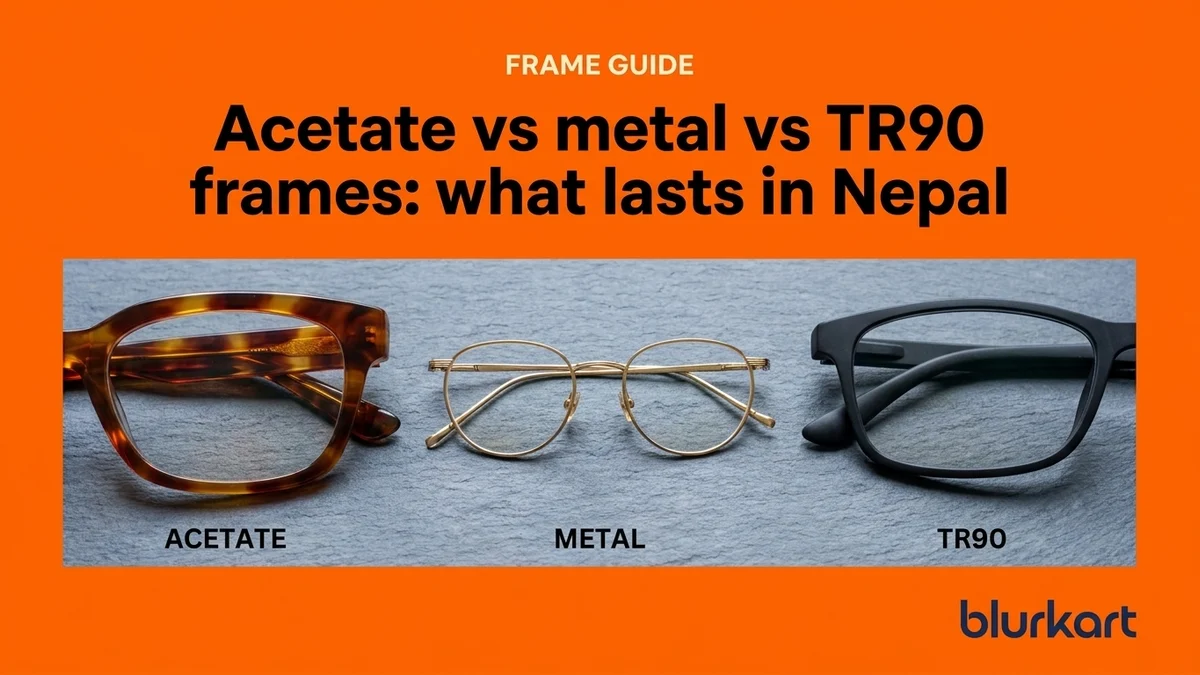
For hard daily use in Nepal, TR90 frames last longest: they bend instead of breaking, weigh almost nothing and do not corrode. Acetate frames look the best and can be adjusted again and again, but they are heavier and warp if left in a hot car. Metal frames are the lightest and thinnest, and the cheap ones corrode with sweat inside a year. Which one to buy depends on how you spend your day.
Acetate
Acetate is a plant-based plastic sold in sheets, and it is what most designer-looking frames are cut from. The colours and patterns are in the material itself, not painted on, so they do not wear off. It takes adjustment well: warm it and it moves, cool it and it holds. That is why an acetate pair can be refitted for years.
The downsides in our climate: weight, and heat. A thick acetate frame is 25 to 35 grams and leaves nose marks by evening if the pads are not set well. And acetate softens above about 60 degrees, which is the temperature of a motorbike seat or a car dashboard in May. We straighten a lot of dashboard frames every summer.
Buy acetate if you work indoors, care how the frame looks and will not leave it in a vehicle. The Premium Rectangle Frame at NPR 1,500 is a mid-weight acetate that suits most office wearers.
Metal
Metal frames are thin, light and disappear on the face. The quality varies more than any other material. Cheap frames are nickel alloys with a thin plating. Sweat, which Kathmandu summers and monsoon humidity supply in quantity, gets through the plating and reacts with the copper underneath. The frame turns green at the nose and behind the ears within a year, and some people get a skin rash from the nickel.
Stainless steel and titanium do not corrode, do not react with skin, and are what a metal frame should be made of. They cost more and are worth it. Metal also bends and stays bent, so a pair sat on is a trip to the shop, not a shrug.
Buy metal if you want a minimal look and choose stainless or titanium. Our Premium Round Metal Frame at NPR 999 is a light, plated frame that suits a first pair or a spare, with adjustable pads that keep it off the cheeks.
TR90
TR90 is a nylon developed for sports frames. Bend a temple back on itself and it returns. Sit on it and it flexes. It weighs about half what acetate does and it does not corrode, react with skin or soften in heat. It is what we put children in and what we recommend for anyone who rides a bike or works outside.
The trade-off is looks. TR90 comes in fewer colours and the surface is matte, so it reads as sporty rather than dressy. It also adjusts less than acetate; the fit has to be right from the frame rather than shaped afterwards.
Buy TR90 if you are hard on frames, ride a motorbike, or are buying for a child. For that last case, our guide to a child's first pair of glasses covers the test and the fit.
What breaks first, whatever the material
Hinges. Pulling glasses off with one hand twists the hinge every time, and after a year the screw loosens or the barrel cracks. Spring hinges take that abuse; fixed hinges do not. Check for spring hinges before you check the material. Our post on caring for your glasses covers the two-handed habit that doubles a frame's life.
Acetate vs metal frames vs TR90: our pick by lifestyle
- Office, indoors, appearance matters: acetate.
- Motorbike commute, dust, sweat, kids: TR90.
- Minimal look, willing to pay for titanium: metal.
- Any of the above with a prescription above minus 4: full-rim acetate or TR90 to hide lens thickness.
Chasma frame material in Nepal: what customers bring back
The repairs counter is the honest guide to what lasts. In a typical month we see:
- Metal frames with green corrosion at the nose pads and behind the ears. Almost always a cheap plated alloy bought during the monsoon. The fix is a new frame; the plating is gone.
- Acetate frames warped into a curve. Left on a dashboard, a scooter seat or a windowsill in May. Usually fixable with heat, sometimes not.
- Snapped hinges on both. Pulled off with one hand a thousand times. Spring hinges survive this; fixed hinges do not.
- TR90 frames come back for lens changes and almost nothing else.
So when a customer asks "kun frame dherai tikchha?", the answer for a motorbike commuter is TR90, for an office worker is acetate, and for anyone who wants metal is titanium or stainless steel, never the NPR 500 plated kind.
Whatever you choose, bring it in once a year. Refitting is free and it is the cheapest maintenance a frame gets.
Frequently asked
- Why did my metal frame turn green at the nose?
- Sweat reacting with the copper in a nickel alloy. It is harmless but ugly, and it means the plating is gone. Titanium and stainless frames do not do it.
- Can a warped acetate frame be fixed?
- Usually. We warm it and reshape it in a few minutes. Frames left on a car dashboard in May are the ones that go beyond saving.
- Is TR90 the same as the cheap plastic on roadside frames?
- No. TR90 is a nylon that flexes and returns. Cheap frames are brittle polycarbonate or acrylic that snap at the hinge.
- Which material for a strong prescription?
- A full-rim acetate or TR90 frame hides thick lens edges better than a thin metal rim.
- Kun chasma frame Nepal ko mausam ma dherai tikchha?
- TR90 lasts longest for hard daily use: it bends back, weighs little and does not corrode. Acetate lasts well indoors but warps in a hot vehicle. Metal lasts only if it is stainless steel or titanium; plated alloys corrode with sweat within a year.