
Coloured contact lenses that still look natural on brown eyes
On dark brown eyes only opaque lenses change the colour, because enhancement tints are translucent and disappear over dark irises. Honey, hazel and warm grey read as natural; bright blue, green and violet usually do not. A soft or absent limbal ring looks more real than a heavy dark outline.
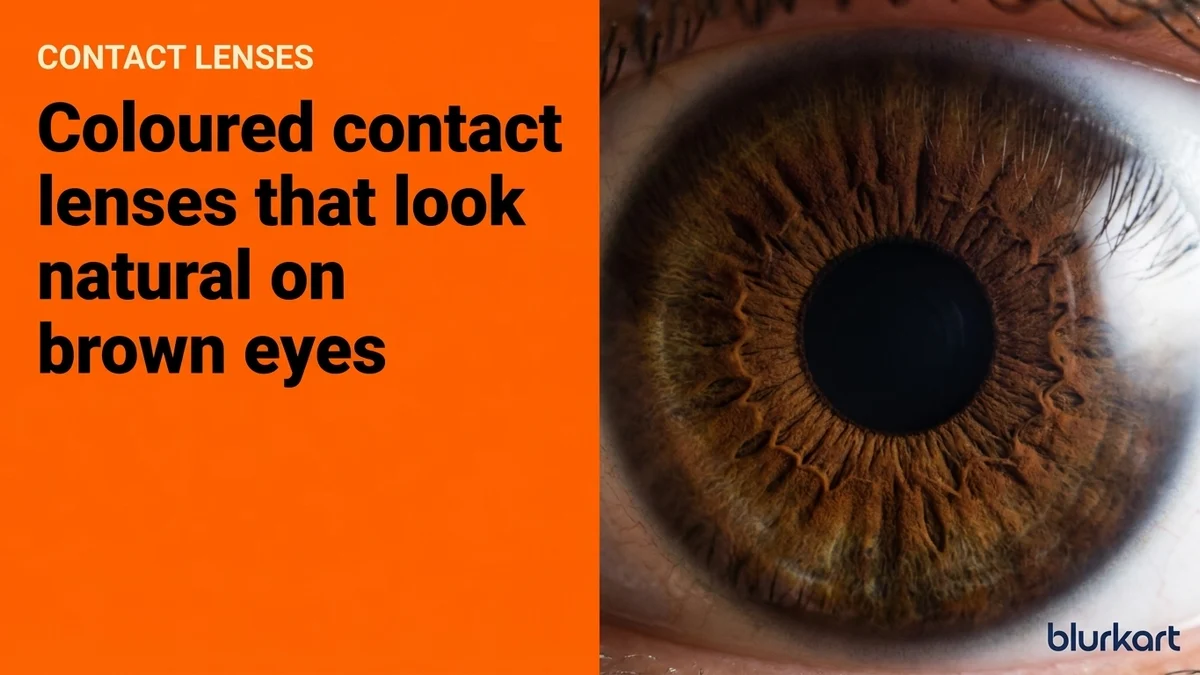
Coloured contact lenses look natural on dark brown eyes only when two things are right: the lens is opaque rather than an enhancement tint, and the colour sits in the warm family rather than the bright one. Get either wrong and the result reads instantly as contact lenses, which is usually the opposite of the goal.
Here is how to choose, and the safety point that matters more than any shade.
Enhancement tints do nothing on brown eyes
Lenses come in two families. Enhancement tints are translucent, designed to deepen or brighten an iris that is already light. Held up to the light they look like tinted glass.
On a dark brown iris, which is most eyes in Nepal, a translucent tint disappears completely. People buy them expecting a subtle change and see nothing at all.
Opaque lenses print a pattern that covers the iris underneath. Those are the ones that work on brown eyes, and their printed pattern is also what can make them look artificial.
Coloured contact lenses that read as natural
Honey and light brown. The safest choice by a distance. It lifts the eye a shade or two and, in most light, nobody registers that anything changed.
Hazel. Warm with a hint of green toward the outside. Looks natural in daylight and slightly more noticeable under indoor light.
Warm grey. Works on medium brown eyes and can look striking without looking fake, though it shifts cooler than most Nepali skin tones sit.
The ones that rarely look natural on dark eyes are bright blue, bright green and violet, because the opaque print has to be dense to cover brown, and dense bright colour looks painted.
The limbal ring is the giveaway
The limbal ring is the darker circle where the iris meets the white. Many coloured lenses print a thick, very dark version of it to make the eye look bigger.
That ring is the single biggest reason lenses get spotted. A real limbal ring is soft and fades with age. A printed one is hard edged and identical on both eyes. If natural is the aim, choose lenses with a soft or minimal outer ring, and avoid the large-diameter styles sold for a doll-eye effect.
The safety part, which matters more than the colour
A coloured lens is a medical device even with zero power. It has to match the curvature of your eye, or it rubs, and a rubbing lens scratches the cornea. That is true of a fashion lens exactly as it is of a prescription one.
Most of the contact lens problems we see in Lalitpur come from unbranded coloured lenses bought at a stall or from an online seller, worn without any fitting, often shared between friends and slept in. The colour was never the problem; the fit, the material and the hygiene were.
Buy branded, get fitted, and follow the same routine as clear lenses. Our guide to contact lenses in Nepal covers that routine, and daily versus monthly costs covers the maths.
Daily or monthly for coloured lenses
Daily, if you wear them occasionally. Most people buy coloured lenses for weddings, festivals, photos and nights out rather than daily wear, and a daily lens means no cleaning routine for something worn twice a month. A clear daily like the SEED 1dayPure pack at NPR 3,900 shows the pattern of use we mean.
Monthly makes sense only if you genuinely wear them most days, and then hygiene discipline has to be real.
Colour lens: what customers ask us
"Kalo aankha ma colour dekhinchha?" Only with opaque lenses. Enhancement tints show nothing on dark brown.
"Natural dekhine kun ho?" Honey, then hazel. Avoid bright blue and green, and avoid a thick dark outer ring.
"Power nabhaye pani fitting chahinchha?" Yes. The curvature has to match your eye whether or not the lens carries a power.
"Sathi sanga share garna milchha?" Never. Sharing lenses transfers infection directly between eyes and is the fastest route to a problem we can see from across the room.
"Bihe ma lagauna kinne ho bhane kahile aaune?" Come at least a week before. A fitting plus a short practice period means the big day is not the first time you have ever put a lens in.
What we would do
If you want the change nobody comments on, honey opaque dailies in your fitted curvature, worn for the event and binned that night. If you want a noticeable change, go in knowing it will be noticed, and still get fitted. The fitting is free at both Lalitpur showrooms, and it is the part that keeps this a style decision rather than a medical one. Lenses like the iConnect monthly pack at NPR 1,100 show the price level for regular wear once you know lenses suit you.
Frequently asked
- Do coloured contact lenses work on dark brown eyes?
- Only opaque ones. Enhancement tints are translucent and made to deepen a light iris, so on dark brown they are invisible. Ask specifically for opaque.
- Are coloured contact lenses safe?
- Branded lenses fitted properly are as safe as clear ones. The risk comes from unbranded lenses sold without a fitting, which are a common cause of corneal problems.
- Do I need a prescription for zero-power coloured lenses?
- You still need a fitting. A lens that does not match the curvature of your eye can scratch the cornea whether or not it carries a power.
- Natural dekhine colour contact lens kun ho?
- Honey, hazel and warm grey look most natural on dark brown eyes. Avoid bright blue, green and violet, and avoid lenses with a heavy black outer ring, which is what makes them look obviously artificial.
- Coloured lens lagauda aankha lai asar garchha?
- Sahi tarikale fitting garayo ra safa rakhyo bhane asar gardaina. Samasya lens ko rang le hoina, safai nagardaa hunchha. Purano solution thapnu hunna ra paani le dhunu hunna.