
Glasses frame size: what 52-18-140 actually means
The three numbers printed inside the temple arm are lens width, bridge width and temple length in millimetres, for example 52-18-140. Match the first two within about 2 mm of a frame that already fits and the new one will fit too. Total frame width is roughly twice the lens width plus the bridge.
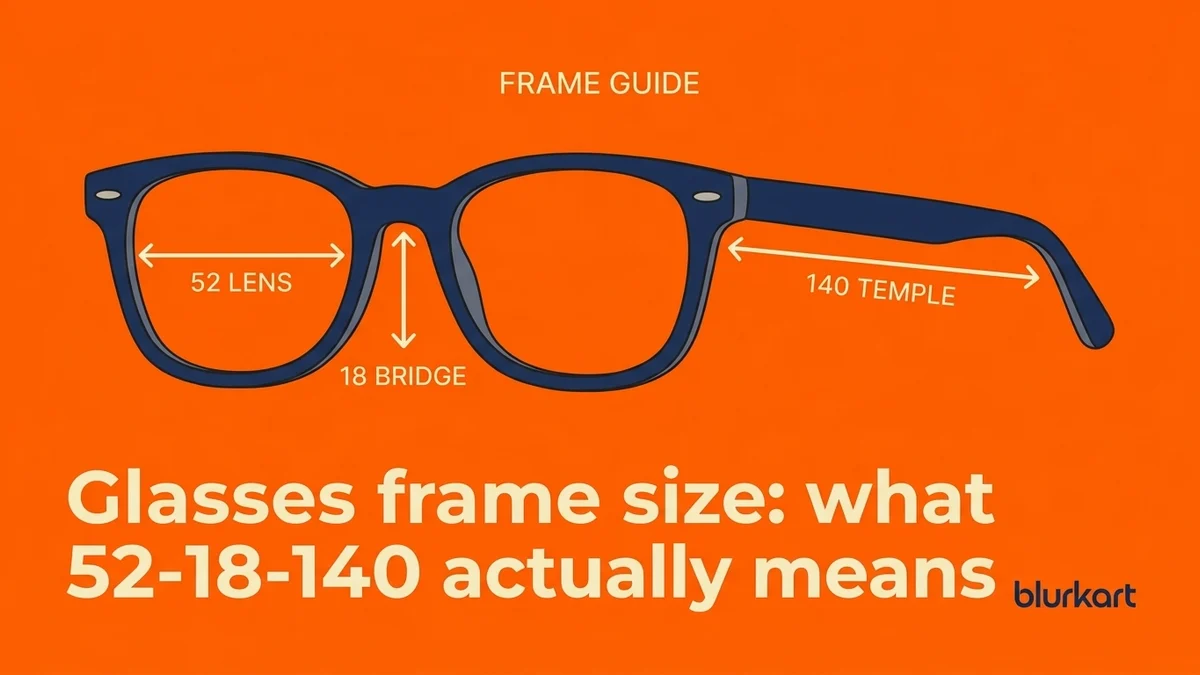
The three numbers inside your temple arm are your glasses frame size: lens width, bridge width and temple length, all in millimetres. A frame marked 52-18-140 has 52 mm lenses, an 18 mm gap over the nose and 140 mm arms. Learn to read them once and you can order any frame online without guessing.
Where to find them
Open the glasses and look at the inside of the left temple arm, near the hinge. The numbers are small and often separated by a little square symbol, so 52▫18 140 means the same as 52-18-140. Some frames print them on the bridge instead.
If they have worn off, which happens on older acetate frames, bring the pair to either showroom and we measure it on a gauge in under a minute.
What each number does
Lens width, the first number
The horizontal width of one lens opening, usually 45 to 58 for adults. This drives how big the glasses look on your face and, at strong prescriptions, how thick the edges get, which is why our post on high index lenses keeps coming back to frame size.
Bridge width, the second number
The gap between the two lenses, usually 14 to 21. This is the number that decides comfort. Too wide and the frame slides down your nose all day. Too narrow and it pinches and leaves red marks.
Many frames designed for European faces assume a higher nose bridge than a lot of Nepali faces have, which is why so many people push their glasses up constantly and blame the frame. A smaller bridge number, or a metal frame with adjustable nose pads like the Premium Round Metal Frame at NPR 999, fixes it.
Temple length, the third number
Hinge to tip, usually 135 to 150. The most forgiving of the three, because we heat and bend the curve behind your ear at fitting. Within 10 mm of your usual is fine.
Glasses frame size: working out total width
Double the lens width, add the bridge, then add a few millimetres for the rims. A 52-18 frame is about 122 mm of lens and bridge, so roughly 128 to 132 mm overall depending on rim thickness.
Compare that with your face. Measure the widest part of your face at the temples with a ruler; most adults land between 130 and 145 mm. The frame should match that or sit up to 5 mm wider. A frame narrower than your cheekbones makes the sides of your face look wider, whatever shape it is, which is the point we made in picking glasses for a round face.
One number that is not printed: lens height
Vertical lens height is not part of the three, and it matters if you wear progressives. A progressive needs at least about 30 mm of lens height to fit the reading zone in comfortably. Very shallow fashionable frames cannot carry one well. We list lens height on our product pages for this reason, and we will tell you if a frame you love cannot take the lens you need.
Chasma ko size: what people ask us
"Online kinda size kasari milaune?" Read the three numbers from a pair that fits, match the first two within 2 mm, and order. Our full walkthrough is in buying glasses online in Nepal.
"Purano chasma chhaina bhane?" Measure your face at the temples with a ruler in millimetres and match the total frame width to that number.
"Naak bata chasma jharchha, ke garne?" Usually the bridge is too wide. Either choose a smaller bridge number, or pick a frame with adjustable nose pads that we set to your face.
"Size galat bhayo bhane?" Exchange it. We cut lenses only after the frame is confirmed, so an exchange costs you a day and nothing else.
A worked example, start to finish
Say your current pair reads 50-20-145 and it slides down your nose by lunchtime. Here is how we would read that.
The 50 is a modest lens width, so the frame is not oversized. The 20 is a wide bridge, and that is almost certainly the problem: your nose is not filling it, so nothing holds the frame up. The 145 is a long temple, fine either way because we adjust the bend.
The fix is a frame at 50-17 or 52-17, keeping the lens size you are used to while closing the bridge by three millimetres. That single change is usually the difference between pushing your glasses up all day and forgetting you are wearing them.
Now the reverse case. Your pair reads 54-16-140 and it pinches, leaving red marks either side of the nose. The bridge is too narrow. Move to 54-18 and keep everything else.
This is the whole method: change one number at a time, keep the others, and let the fitting handle the temple.
The thirty-second version
If the numbers look right and it still slides, read why glasses slide down. Find a pair that fits. Read the numbers inside the temple. Match the first two. Everything else we adjust at the counter, free, for as long as you own the frame.
Frequently asked
- Where are the numbers printed on glasses?
- Inside the left temple arm, sometimes on the bridge itself. They read like 52-18-140 or 52▫18 140. If yours have worn off, bring the frame in and we measure it in a minute.
- How close do the numbers need to match?
- Within about 2 mm on lens width and bridge. Temple length can vary more because the bend behind the ear is adjustable.
- What if I have never owned glasses?
- Measure the widest part of your face at the temples with a ruler in millimetres. Most adults are 130 to 145. Choose a frame whose total width matches that or is up to 5 mm wider.
- Chasma ko size kasari thaha paune?
- Look inside the temple arm of a pair that fits you; the three numbers are printed there. Match the first two within 2 mm when ordering. No old pair? Measure your face width at the temples with a ruler.