
Blue Cut Lenses vs. Blue Control Lenses: Which One Should You Choose?
As digital screen use continues to rise, more people are considering lenses that reduce blue light exposure. Two popular options are Blue Cut lenses and Blue Control lenses but what sets them apart, and how do you choose the right one for your lifestyle?
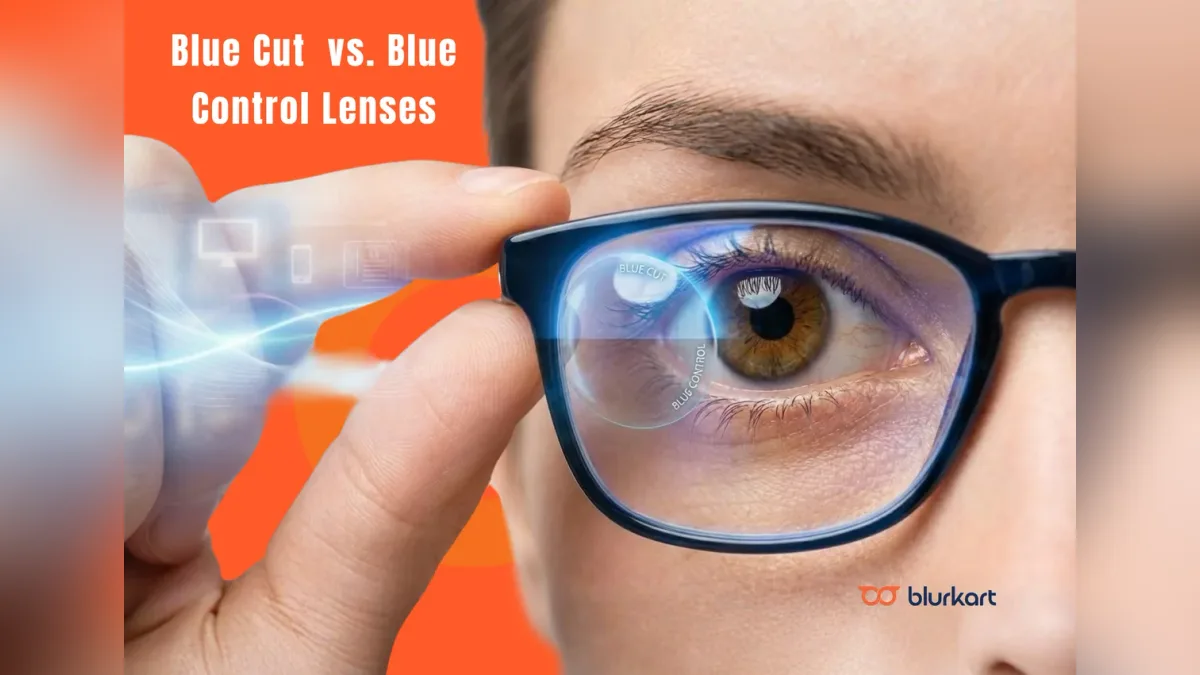
As digital screen use continues to rise, more people are considering lenses that reduce blue light exposure. Two popular options are Blue Cut lenses and Blue Control lenses but what sets them apart, and how do you choose the right one for your lifestyle? In this guide, we’ll break down the science, benefits, limitations, and best use cases for both so you can make an informed decision.
What is Blue Light & Why Does It Matter?
Blue light is part of the visible light spectrum, with short wavelengths and high energy. It’s emitted by digital screens (phones, computers, TVs), LED lights, and the sun. Prolonged exposure especially from screens is often linked to eye strain, fatigue, and disrupted sleep cycles, though scientific evidence is mixed about the degree of harm.
Blue Cut Lenses: Strong Protection Against Blue Light
Blue Cut lenses are designed to block a significant portion of blue light, especially the harmful spectrum emitted by digital screens and artificial lighting. They often have a slight yellowish tint that helps filter out blue wavelengths.
How They Work
These lenses filter out a large percentage of blue light typically more than Blue Control lenses especially in the 400, 450 nm range (most associated with digital screens). The yellowish tint helps reduce glare and eye strain during prolonged screen use.
Benefits
-
Stronger blue light blocking effect ideal for heavy screen users and gamers.
-
Can help reduce digital eye strain and minimize glare.
-
May support better sleep quality by lessening blue light exposure in the evening.
Limitations
- Slight tint can alter color perception for some users.
- May not be necessary for casual screen users.
Blue Control Lenses: Balance and Clarity
Blue Control lenses offer a selective approach filtering out harmful blue light while letting beneficial wavelengths pass through, helping to maintain natural color perception.
How They Work
- These lenses are treated with special pigments or coatings that block a portion of harmful blue-violet light (around 400, 455 nm) but allow helpful blue-green light (455, 500 nm) to reach your eyes.
- The result is a nearly transparent lens with minimal tint.
Benefits
- Reduces glare and visual fatigue from screen time with very little color distortion.
- Natural and clear appearance great for daily wear.
- Ideal for office workers, students, and people with moderate screen use.
Limitations
- Blocks less blue light overall compared to Blue Cut technology.
- Might not be enough for users with high sensitivity to blue light.
Which One Should You Choose?
Go for Blue Cut If:
· You spend many hours a day on digital devices (PC, gaming setup, multiple screens).
· You notice eye strain, headaches, or sleep issues linked to screen time.
· You don’t mind a slight tint in exchange for stronger filtering.
Choose Blue Control If:
· You want balanced protection with minimal color distortion.
· Your screen use is moderate (office work, study).
· A clear appearance is a priority (professional look).
While many people report subjective benefits from blue light lenses, scientific evidence on actual eye health benefits particularly in reducing eye strain or preventing long‑term damage remains mixed. Some systematic reviews find limited evidence that blue light lenses significantly reduce screen‑related eye strain or improve sleep.
So even though these lenses can feel helpful for extended screen sessions, it’s also important to combine them with good habits like taking regular breaks (the 20‑20‑20 rule), adjusting screen brightness, and ensuring proper lighting.
Ready to protect your eyes and reduce digital strain? Explore our wide range of Blue Cut and Blue Control lenses at BlurKart and find the perfect solution for your screen time, lifestyle, and visual comfort. Shop now and give your eyes the care they deserve!
Both sit on top of an anti-reflective layer, which is the part that matters most, as we argue in is an anti-reflective coating worth the extra NPR. For the honest limits of the blue-filtering claim itself, see do blue light glasses actually work. Blurkart blue coat lenses are NPR 750, and the multi-coated version is NPR 1,800. Either filter goes onto a frame like the Premium Rectangle Frame with blue light protection at NPR 1,500.
What to buy instead of arguing about the name
The honest summary is that blue cut and blue control are shop labels rather than defined standards, and two lenses with the same name can behave differently. What is defined is the anti-reflective coating, and that is the layer doing most of the work people attribute to blue filtering.
So the useful question at the counter is not which blue label to pick. It is how many coating layers the lens has and whether a proper anti-reflective stack is included. At Blurkart the blue coat lens is NPR 750 and the multi-coated version at NPR 1,800 includes that stack, which is what we would put in our own glasses.
Lens coatings explained goes through each layer and what it actually does.
Frequently asked
- What is the difference between blue cut and blue control lenses?
- Blue cut filters blue light through a coating on the lens surface. Blue control builds the filter into the lens material, so the effect is more even and the lens usually has a lighter residual tint.
- Which one should I buy for office work?
- Either works, and the anti-reflective layer underneath matters more than the blue filter. Our multi-coated lens at NPR 1,800 is the one we fit most for desk workers.
- Do these lenses have a colour tint?
- A slight yellow or amber cast is normal on blue cut lenses and is usually stronger than on blue control. It is most noticeable on white screens and in photos.
- Blue cut ra blue control lens ma ke farak chha?
- Largely two shop names for the same idea, a coating that reflects part of the blue end of the spectrum. What actually changes how your eyes feel is the anti-reflective layer. At Blurkart a blue coat lens is NPR 750 and the multi-coated version, which includes the better anti-reflective, is NPR 1,800.