
Prescription Lenses in Nepal: Blue Cut, Progressive and Driving
Modern professionals face daily eye strain from screens and commuting. Upgrading to blue light filter lenses, seamless progressive lenses, and anti-glare driving lenses dramatically improves visual comfort, while annual eye exams ensure long-term optical health.
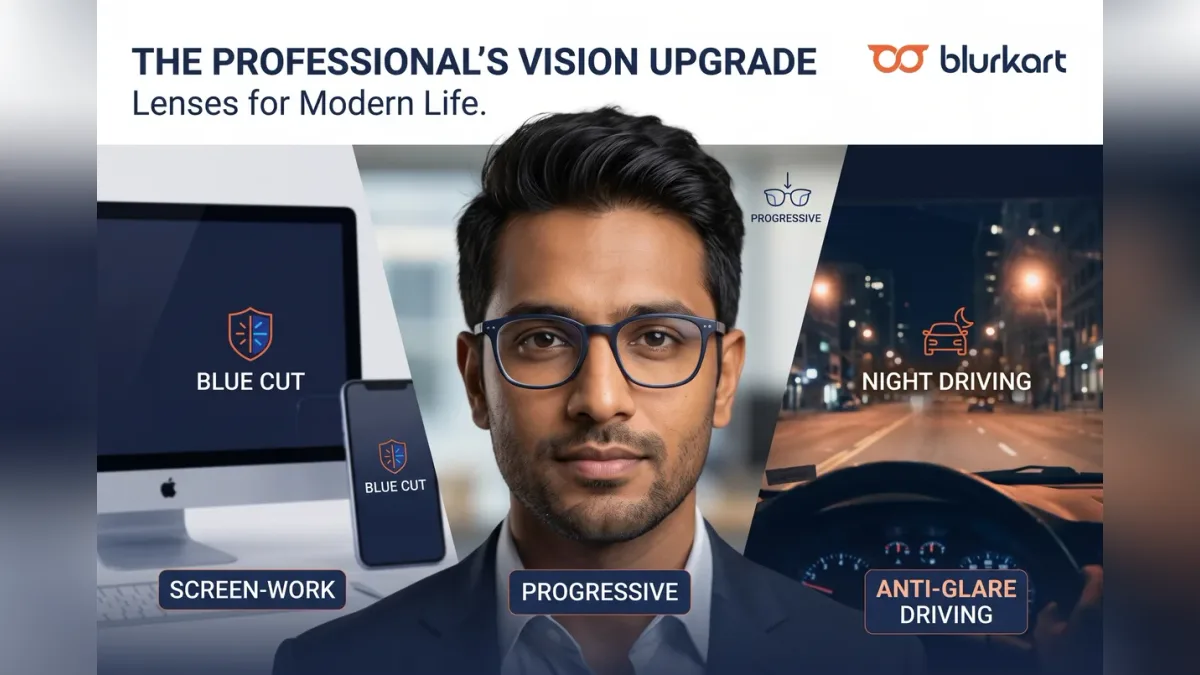
Buying prescription lenses in Nepal means choosing between several coatings and designs that shops rarely explain. The Modern Professional’s Eyecare Playbook: Blue Light, Progressive Lenses & Sharper Vision
Between 8-hour workdays, smartphone notifications, and late-evening commutes, your eyes work harder than ever. Yet, eye strain, afternoon headaches, and blurry night driving are often dismissed as "just part of the grind."
Investing in the right lenses and frames isn't just about vision correction, it is an investment in daily focus, comfort, and professional style.
Here is everything you need to know about choosing the right lenses, finding the right frame for your face, and keeping your vision in peak condition.
1. Blue Light Filter Lenses: Beat Digital Fatigue
Quick Answer: Blue light filter lenses (or Blue Cut lenses) feature a specialized coating designed to block or absorb high-energy visible (HEV) blue light emitted by digital screens, reducing digital eye strain, glare, and circadian rhythm disruption.
If your daily routine involves laptops, monitors, and tablets, standard prescription lenses won't shield you from screen-induced fatigue.
• Why you need them: Blue cut coatings filter out harsh screen glare, helping prevent dry eyes, tension headaches, and restless sleep patterns after late work sessions.
• Who it’s for: Programmers, corporate professionals, writers, analysts, and anyone spending more than 4 hours a day in front of screens.
2. Progressive Lenses: Smooth Vision at Every Distance
Quick Answer: Progressive lenses are no-line multifocal lenses that provide a smooth, continuous transition between distance vision (top), intermediate computer vision (middle), and near reading vision (bottom) in a single pair of glasses.
Gone are the days of awkward bifocals with visible lines. Modern digital progressive lenses provide an uninterrupted visual transition throughout your workday.
• Cosmetic Look: Smooth, clear single-lens appearance (unlike older bifocals with a visible line).
• Intermediate Vision (Screen distance): Dedicated mid-range focus area.
• Visual Transition: Natural, smooth progression with zero sudden "image jump."
If you find yourself constantly switching between your desk monitor, printed documents, and looking up across the conference room, progressive lenses eliminate the need to swap pairs.
3. Anti-Glare Driving Lenses: Clear Vision on Evening Commutes
Navigating low-light commutes, bright LED headlights, and wet roads puts high demand on visual contrast.
• Polarized & Anti-Reflective Coatings: Specially engineered driving lenses cut reflective surface glare and soften high-beam glare from oncoming traffic.
• Enhanced Depth Perception: Improved contrast helps you spot road hazards and distance changes faster, making night commutes safer and far less exhausting.
4. Matching Prescription Frames to Your Face Shape
Great eyewear balances visual performance with sharp personal aesthetics. Here is a quick reference guide to finding your ideal frame silhouette:
• Round Face: Choose structured rectangular, square, or geometric frames to add definition and lengthen facial contours.
• Square Face: Opt for round, oval, or thin wire frames to soften strong jawlines and angular features.
• Oval Face: Versatile face shape that pairs well with aviators, wayfarers, and bold browline styles.
• Heart-Shaped Face: Look for light rimless, bottom-heavy, or classic aviator frames that balance a broader forehead.
5. Why an Annual Comprehensive Eye Exam Matters
Even if you have 20/20 vision or your current prescription feels "fine," vision changes happen gradually. An annual comprehensive eye checkup does more than update power numbers:
1. Detects Early Eye Health Shifts: Checks intraocular pressure, retinal health, and early signs of strain.
2. Fine-Tunes Ergonomic Fit: Ensures optical centers match your exact pupillary distance (PD) for zero lens distortion.
3. Refreshes Daily Comfort: Re-evaluates whether your current lens coating meets your evolving screen and commute habits.
Buying prescription lenses in Nepal: what it costs
Whether you need a comprehensive optometrist checkup, precision progressive lenses, or sleek blue-cut frames tailored to your work style, Blurkart makes eye care effortless.
• Book Your In-Store Eye Exam Online, Meet our optometrists for a precision evaluation.
• Explore Prescription Frames & Lenses, Browse our latest collection online with home delivery.
Two related reads: whether an anti-reflective coating is worth the extra NPR, which is the layer doing most of the work on night drives, and whether blue light glasses actually work, where we are honest about the limits. For a daily driving and desk pair, the Premium Rectangle Frame at NPR 1,500 with a multi-coated lens is the combination we fit most.
Frequently asked
- What do blue light filter lenses do?
- Blue light filter lenses feature a specialized coating that blocks high-energy visible (HEV) blue light from digital screens, reducing eye strain, glare, and fatigue.
- What are progressive lenses?
- Progressive lenses are modern, no-line multifocal lenses that provide a smooth, continuous transition between distance, intermediate (computer), and near (reading) vision.
- Why should I use special driving lenses?
- Driving lenses use anti-reflective and polarized coatings to cut surface glare and soften harsh LED headlights, improving depth perception and safety during night commutes.
- Power chasma (चश्मा) banauna kati din lagchha?
- One to three working days for most single vision powers. We tell you at the counter if your power needs a thinner high index lens, which takes longer. Bring your prescription slip or take the free eye test here and we work from that.