
ZEISS PhotoFusion X: Photochromic Lenses That Switch Fast
ZEISS PhotoFusion X are photochromic lenses that stay clear indoors and darken to sunglass level outdoors. ZEISS says they darken up to 60% faster and clear up to 80% faster than the previous generation, and they are built on BlueGuard material with built-in blue light and UV protection. They work less well inside cars and for night driving.
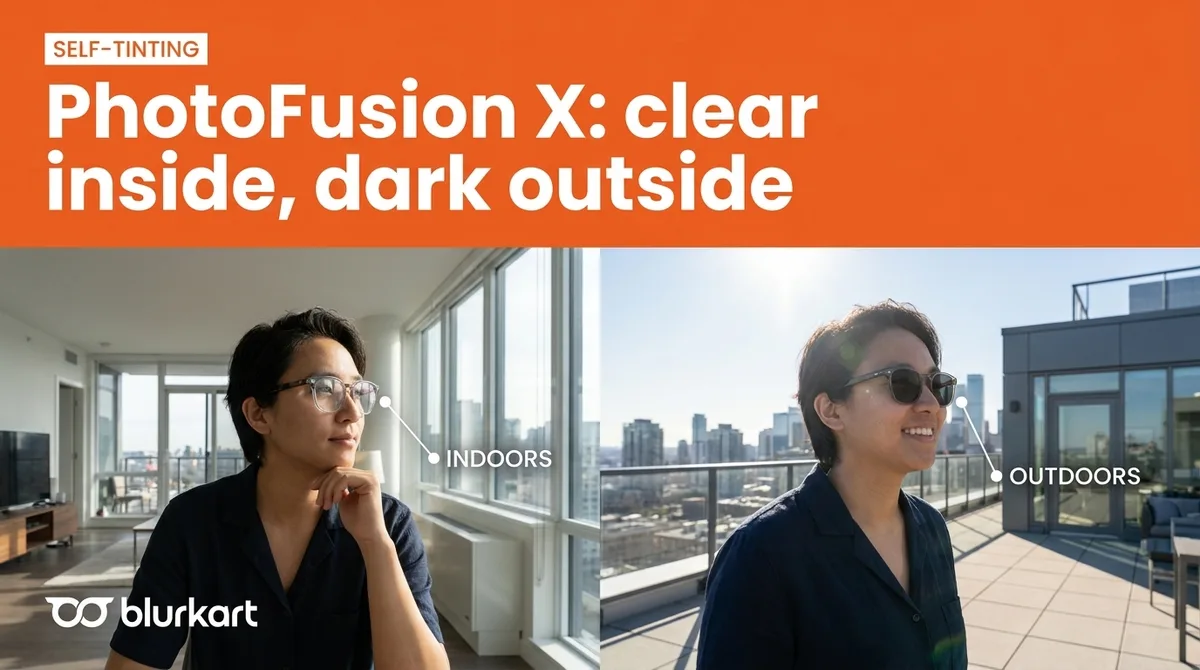
Quick answer
ZEISS PhotoFusion X lenses are photochromic: clear indoors, tinted outdoors. ZEISS says they darken up to 60% faster and clear up to 80% faster than the previous PhotoFusion generation.
Many people would love one pair of glasses that handles both a bright Kathmandu afternoon and a dim office. Photochromic, or self-tinting, lenses aim to do exactly that. PhotoFusion X is the latest ZEISS version.
How photochromic lenses work
They contain tiny light-reactive dye molecules. When UV light hits them, the molecules change shape and the lens darkens. When the UV disappears, they slowly return to clear. Speed matters, because slow clearing is the biggest complaint among wearers who walk from sunlight into a building.
What is new in PhotoFusion X
- New dyes: faster-reacting dye compounds that need very little light energy.
- New carrier matrix: a more open structure that lets the dyes switch quickly.
- New lens material: based on ZEISS BlueGuard, which brings built-in blue light blocking and full UV protection.
ZEISS reports the lenses darken up to 60% faster than the previous generation and clear up to 80% faster, while reaching the same or greater darkness. These are manufacturer figures from its own testing.
Colours and styling
PhotoFusion X comes in several colours, including classic greys and browns and fashion-forward blues. You can add ZEISS DuraVision Flash mirror coatings in colours such as Ruby, Diamond, Amber, Jade and Sapphire. The lenses are available in all ZEISS prescription designs and with all ZEISS coatings.
Where photochromic lenses fall short
- In the car: windscreens block much of the UV that triggers darkening, so the lenses may stay light while driving.
- At night: they are not designed to help with night driving glare. Look at driving lenses instead.
- In cold or hot weather: temperature can affect how dark and how fast the lens reacts.
- Not a true sunglass replacement: they are convenient, but if you want polarisation or maximum darkness, prescription sunglasses are the better choice.
Who should consider PhotoFusion X
If you move between indoors and outdoors all day, hate carrying two pairs, or want built-in UV and blue light protection in everyday glasses, they are worth discussing. Keep in mind that some of the convenience is lost for frequent drivers.
Not sure if self-tinting suits your routine? Book a free eye test at Blurkart and ask for a demo.
Figures are reported by ZEISS. Colours and availability vary by market; confirm with your optician.
Frequently asked
- What are photochromic lenses?
- They are lenses containing light-reactive dyes that darken when exposed to UV light and fade back to clear in the shade or indoors.
- How is PhotoFusion X different from the previous ZEISS PhotoFusion?
- ZEISS says it uses faster dyes in a more open carrier matrix and a new lens material. It reports lenses that darken up to 60% faster and clear up to 80% faster, while reaching the same darkness or better.
- Do they block blue light and UV?
- ZEISS says PhotoFusion X lenses are based on ZEISS BlueGuard material, so they include built-in blue light protection and full UV protection.
- Do they work in the car?
- Not as well. Most windscreens block much of the UV that triggers the change, so lenses may stay lighter inside a car. For driving sunglasses, consider prescription sun lenses instead.
- What colours are available?
- ZEISS offers a range of colours, including grey, brown and blue options, and these can be paired with DuraVision Flash mirror coatings for a distinctive look.