
ZEISS DriveSafe Lenses: Night Driving, Glare and Rain
ZEISS DriveSafe lenses combine Luminance Design, which accounts for larger pupils in low light, with a DuraVision DriveSafe coating that targets wavelengths from LED and xenon headlights. They are everyday lenses, not just driving glasses, available in single vision and progressive. ZEISS reported up to 64% glare reduction at launch.
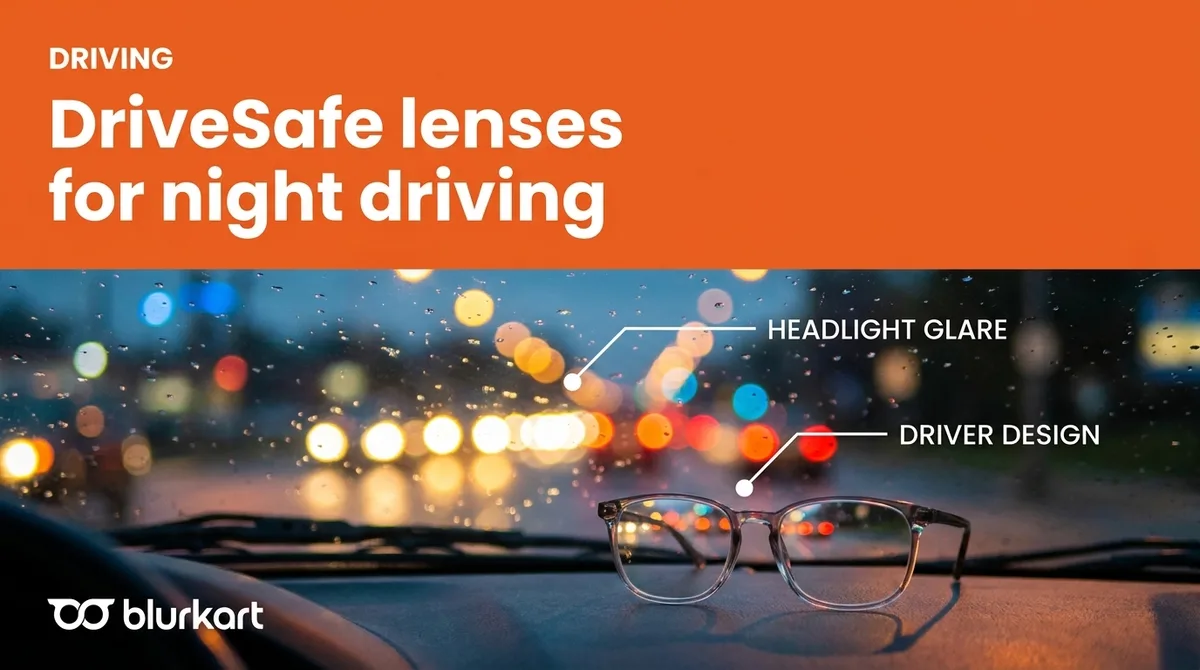
Quick answer
ZEISS DriveSafe lenses are everyday lenses tuned for driving in low light. They combine a design that accounts for larger pupils at night with a coating aimed at LED and xenon headlight glare.
Night driving is hard on the eyes. Oncoming headlights, wet roads, streetlights and rain all add glare and reduce contrast. On busy roads like the Ring Road or the Prithvi Highway after dark, many drivers feel the strain. ZEISS developed DriveSafe to address these specific problems.
Two technologies working together
1. Luminance Design
In dim light your pupils widen, which changes how light enters the eye. ZEISS Luminance Design technology factors in the pupil size at twilight and night, to improve how clear and natural vision looks when it is dark or cloudy.
2. DuraVision DriveSafe coating
This anti-reflective coating was developed with input from a headlight manufacturer. It specifically targets the wavelengths of xenon and LED headlights that can cause blurred vision and discomfort. At launch, ZEISS stated that glare is reduced by up to 64% compared with its standard anti-reflective coating.
Single vision and progressive options
DriveSafe comes in single vision and progressive designs. For progressive wearers, ZEISS optimised the distance and intermediate zones so you can move your eyes between the road, dashboard and mirrors with less head movement. The DriveSafe Individual version adds more customisation, and in a survey of 105 wearers, 82% said they felt more confident driving in all weather conditions.
Who benefits most
- Frequent night and dusk drivers.
- People who notice halos, starbursts or glare from modern LED headlights.
- Taxi, delivery and long-distance drivers.
- Progressive lens wearers who want easier refocusing between road and dashboard.
Photochromic and sunglass options
Self-tinting lenses are not designed to help with night driving, and most car windscreens limit the UV light that triggers them. When DriveSafe launched, ZEISS did not offer the technology in sunglass tints, so if you want driving lenses for daytime sun as well, ask your optician what is currently available.
See an eye doctor if night vision has changed
If you suddenly find night driving much harder, do not assume a lens will solve it. An out-of-date prescription, early cataract or other eye conditions can all affect night vision. Start with a proper examination.
Ready to check? Book a free eye test at Blurkart and ask about driving lens options.
Figures are reported by ZEISS from launch materials and surveys. Availability varies by market; confirm with your optician.
Frequently asked
- What makes DriveSafe different from normal lenses?
- It combines ZEISS Luminance Design technology, which factors in pupil size in dim light, with the DuraVision DriveSafe coating that is tuned to reduce glare from modern headlights.
- Are they only for driving?
- No. ZEISS positions them as all-day lenses, suitable for work, television and hobbies as well as driving.
- How much glare do they reduce?
- At launch ZEISS stated that the DriveSafe coating reduces glare by up to 64% compared with a standard ZEISS anti-reflective coating. Results vary by wearer and conditions.
- Are DriveSafe lenses available for progressive wearers?
- Yes. There are single vision and progressive versions, and the progressive design is optimised for distance and intermediate viewing so you can switch between road, dashboard and mirrors with less head movement.
- What if I struggle to see at night?
- Glare, halos and poor night vision can be caused by an outdated prescription, dry eyes, cataract or other conditions. Have an eye test before assuming lenses alone will fix it.