
Ortho-K Overnight Lenses for Kids: How They Work, Pros and Cons
Ortho-k (orthokeratology) uses rigid lenses worn only while sleeping to gently reshape the cornea, so a child sees clearly all day without glasses, and it also slows myopia progression. It needs careful fitting and strict hygiene, so it suits motivated children and attentive parents.
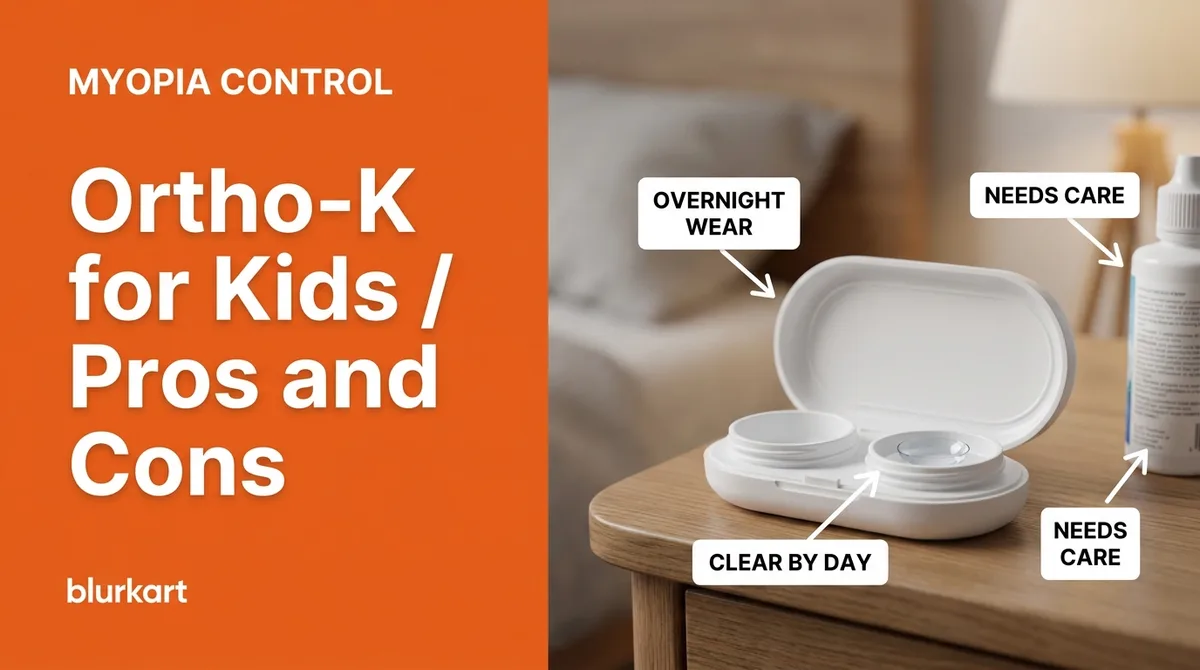
Clear days, no glasses: how that is possible
Ortho-k, short for orthokeratology, sounds futuristic: your child wears special lenses only while sleeping, takes them out in the morning, and sees clearly all day with no glasses and no daytime lenses. It is real, well established, and increasingly chosen by families who want both freedom from glasses and a brake on rising myopia.
How the overnight reshaping works
The front of the eye, the cornea, is slightly flexible. Ortho-k lenses are rigid and precisely shaped to gently flatten the central cornea overnight. That temporary change in shape corrects the focus, so when the lenses come out in the morning, distant objects are clear. The effect lasts through the day and is topped up each night.
It is reshaping, not surgery. Stop wearing the lenses and the cornea slowly returns to its natural shape within days.
The two benefits
- Glasses-free days: ideal for sport, swimming and active children who dislike frames.
- Myopia control: like other control methods, ortho-k slows how fast the power rises over the growing years.
The honest trade-offs
| Pros | Cons |
|---|---|
| No daytime glasses or lenses | Needs disciplined nightly hygiene |
| Slows myopia progression | Requires specialist fitting and follow-up |
| Reversible, not permanent | Higher upfront cost than glasses |
| Great for sport and swimming | Not suited to very young children |
Hygiene is not optional
The single most important part of ortho-k is clean handling. Because the lenses sit on the eye overnight, poor cleaning raises the risk of infection. That means washing and drying hands before handling, using only the recommended solutions, never rinsing lenses in tap water, and keeping every follow-up appointment. With a careful routine, these risks are well managed, which is why ortho-k suits attentive parents and cooperative children.
Is it right for your child?
Ortho-k shines for slightly older, motivated children who want glasses-free days and whose families can commit to the nightly routine and reviews. For a very young child, or a household that would struggle with strict lens care, daytime control lenses or atropine may be simpler. There is no single best method, only the best fit for your child and your routine.
Starting in Nepal
Ortho-k depends heavily on expertise, so seek a practitioner experienced specifically in fitting it. Expect an assessment, a fitting period with adjustments, and a schedule of follow-ups. Treat those reviews as part of the treatment, not an optional extra, and ortho-k can give your child clear, glasses-free days while slowing the march of myopia.
A typical night-and-morning routine
The routine is what makes ortho-k safe, so it is worth picturing. At night, your child washes and dries their hands, cleans the lenses with the recommended solution, inserts them, and sleeps. In the morning, they remove the lenses, store them properly, and head out with clear vision and no glasses. It becomes second nature within a couple of weeks, but it must be done the same careful way every single time, because shortcuts are where infections start.
Ortho-k, atropine or control lenses: choosing
| If you want... | Consider |
|---|---|
| Glasses-free days for sport | Ortho-k |
| The simplest daily routine | Control lenses or atropine |
| An option for a very young child | Control lenses or atropine |
| Maximum braking for fast progression | A combination, guided by your specialist |
There is no single winner. The right choice depends on your child's age, maturity, lifestyle and your family's ability to keep up the routine. A specialist will help you weigh these honestly rather than selling one approach.
Frequently asked
- Is ortho-k safe for children?
- When fitted by a specialist and used with strict hygiene, ortho-k is widely used in children. The main risk is eye infection from poor lens hygiene, which is why training and follow-up matter so much. It is reversible if you stop.
- Does ortho-k cure myopia?
- No. It temporarily reshapes the cornea so vision is clear during the day, and it slows progression, but it does not permanently cure myopia. Stop wearing the lenses and the eye gradually returns to its original shape.
- How quickly does ortho-k work?
- Many children notice clearer vision within the first week or two, with the full effect settling over a few weeks. The specialist adjusts the fit during this period.
- Who is ortho-k best for?
- Motivated, slightly older children who dislike daytime glasses, play sports, or whose parents can supervise a careful nightly cleaning routine. It is not ideal for very young children who cannot cooperate with lens handling.
- Is ortho-k available in Nepal?
- It is offered by some specialist practitioners. Because fitting and follow-up are critical, choose a practitioner experienced specifically in ortho-k, and commit to the review schedule.