
Low-Dose Atropine for Myopia: What Nepali Parents Should Know
Low-dose atropine is a very dilute nightly eye drop with strong evidence for slowing childhood myopia progression, often used alongside glasses. It is a prescription medicine, so it must be started and monitored by an eye doctor. Most children tolerate the low concentrations well.
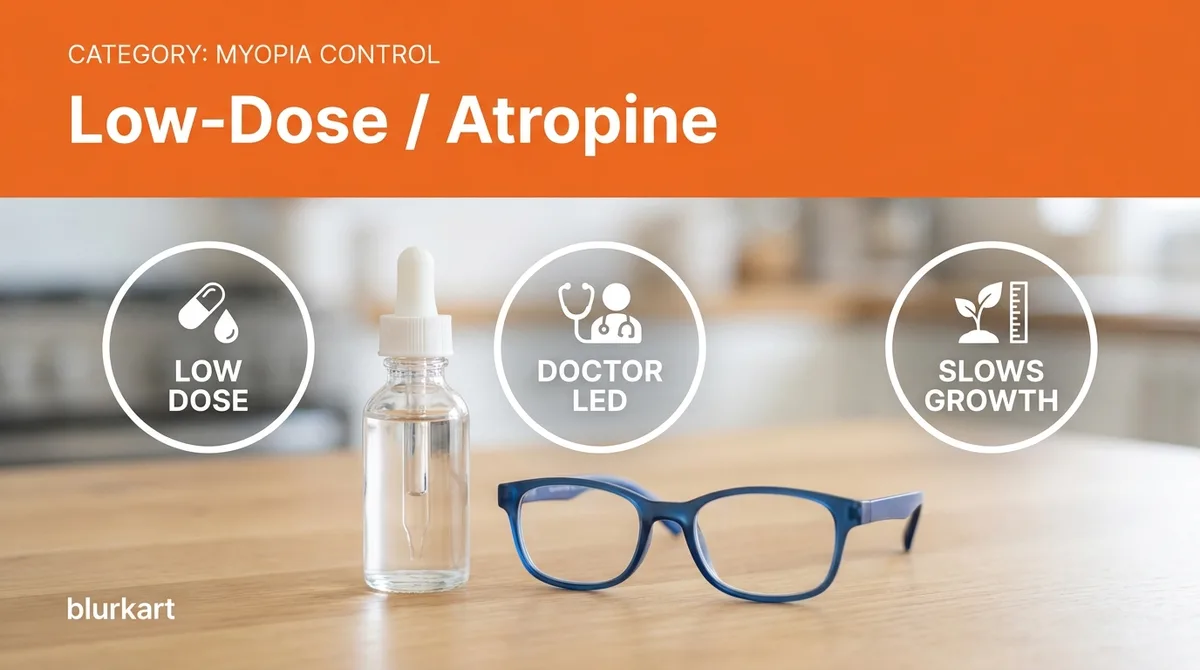
Why a drop, not just stronger glasses
If your child's glasses power climbs every year, you have probably wondered whether anything can slow it down. One of the best-studied answers is surprisingly small: a very dilute atropine eye drop, used once at night. It will not sharpen your child's sight or shrink the current number. What it does, quietly, is slow how fast the eye grows, which is what drives rising myopia in childhood.
This matters because a lower final prescription in adulthood means thinner lenses and, more importantly, a lower lifetime risk of serious eye problems linked to high myopia.
How low-dose atropine works
Atropine has been used in eye care for a very long time, traditionally in strong concentrations to dilate the pupil for examinations. For myopia control, a much lower concentration is used, far too weak to cause the big dilation people associate with the word. At this low dose, it appears to influence the signals that tell the eye to keep elongating, slowing progression without the heavy side effects of the strong version.
Think of it as a gentle brake on eye growth, not a correction. The glasses still do the seeing; the drop slows the race.
What to expect night to night
- One drop, at bedtime, usually in both eyes, as directed.
- No change to daytime vision for most children at low doses.
- Possible mild light sensitivity in some; a hat or tinted lenses outdoors can help if so.
- Regular reviews every few months to measure progress.
How it compares with other options
| Approach | Daily effort | Needs a doctor |
|---|---|---|
| Low-dose atropine | One nightly drop | Yes, prescription |
| Myopia control lenses | Wear glasses all day | Eye test + fitting |
| Ortho-k | Nightly lens care | Yes, specialist fitting |
| Daylight outdoors | Habit change | No |
These are not rivals. Many children do best with a combination, most commonly a nightly drop plus control glasses and daily outdoor time.
Who it suits
Atropine is often considered when a child's power is rising quickly, when they are young enough that several growing years remain, or when glasses alone have not slowed progression. The decision is individual, which is exactly why it needs an eye doctor rather than a shop counter.
Getting started in Nepal
Begin with a proper eye examination and raise the words myopia management, not just a new prescription. If atropine is recommended, the specialist will set the concentration and schedule, and plan the follow-up visits. Keep the glasses up to date in parallel, choose a frame your child actually likes so it stays on their face, and protect the daily daylight habit. The drop is powerful precisely because it works alongside everything else, not instead of it.
What the evidence actually shows
Low-dose atropine is not a fashionable guess; it is one of the most studied approaches to slowing childhood myopia. Across large trials, children on appropriate low concentrations progressed meaningfully slower than those on placebo, with far fewer side effects than the old strong doses caused. Results vary from child to child, which is why your eye doctor measures progress rather than assuming a fixed outcome. The headline is simple: for many children, a tiny nightly drop genuinely slows the march of rising power.
Questions worth asking your eye doctor
- Is my child a good candidate, given their age and how fast the power is rising?
- What concentration are you starting with, and why?
- Should we combine it with control lenses or more outdoor time?
- How often will we review progress, and what counts as success?
- What side effects should I watch for, and what do I do if they appear?
Good myopia care is a partnership. The more clearly you understand the plan, the more consistently it gets followed at home, and consistency is what makes a nightly drop work.
Frequently asked
- Is low-dose atropine safe for children?
- At the low concentrations used for myopia control, most children tolerate it well, often with no noticeable effect beyond slightly more light sensitivity in some. It is a prescription medicine, so an eye doctor supervises the dose and monitors for any side effects.
- Does atropine improve my child's vision?
- No. It does not sharpen sight or reduce the current power. Your child still wears their glasses. Atropine works in the background to slow how fast the power increases over the growing years.
- Can atropine be combined with myopia control glasses?
- Yes, and it often is. Combining a nightly drop with control lenses and plenty of daylight is a common, layered approach for children whose power is rising quickly.
- How long does a child stay on atropine?
- Usually for the years when the eye is growing fastest, with regular reviews. Your eye doctor decides when to continue, adjust or stop based on how the power is tracking.
- Is atropine available in Nepal?
- Low-dose atropine for myopia control is prescribed by eye specialists. Start with an eye examination and ask specifically about myopia management options for your child.