
ZEISS MyoCare Lenses: Myopia Management for Children
ZEISS MyoCare lenses are spectacle lenses designed to slow myopia progression in children. MyoCare is for children under 10 and MyoCare S for ages 10 and up. They use microstructures to create competing myopic defocus. In a ZEISS-linked trial the lenses reduced axial growth, but they manage myopia rather than cure it.
Quick answer
ZEISS MyoCare lenses are spectacle lenses made to slow the progression of myopia in children. MyoCare is for children under 10, and MyoCare S is for children aged 10 and above.
Myopia is rising among children in many countries, and parents often ask whether glasses can do more than simply help their child see the board. Myopia management lenses aim to do exactly that: correct vision and also slow the eye from growing longer too quickly.
How MyoCare works
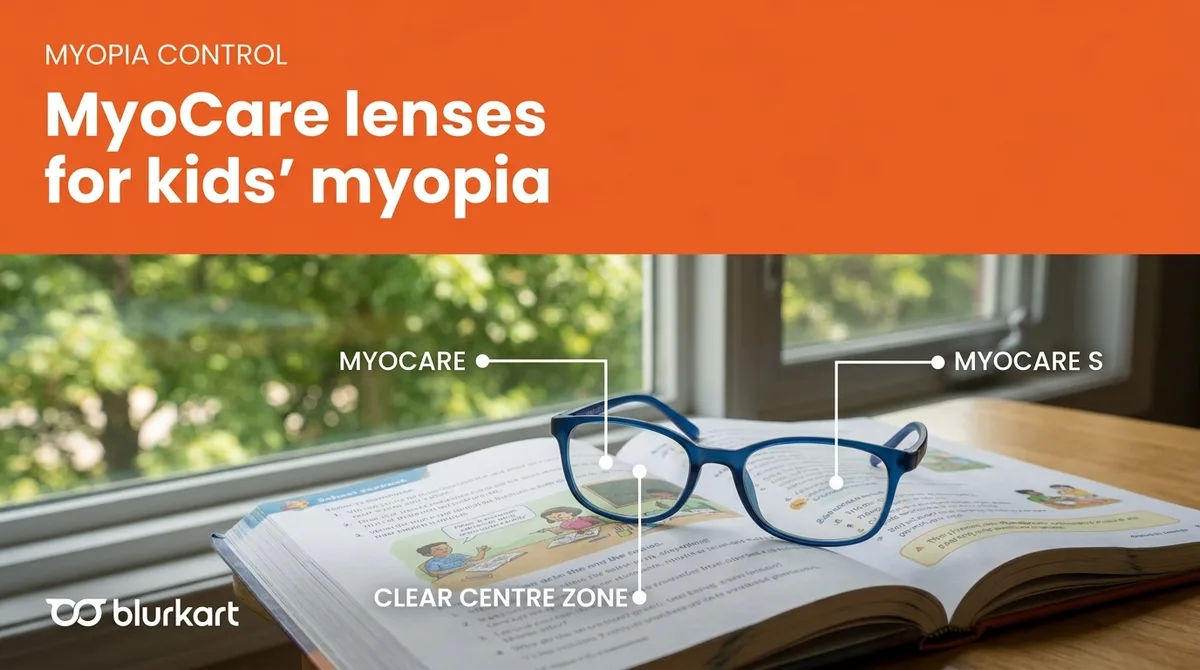
Myopia progresses as the eyeball grows too long. MyoCare lenses use tiny structures called cylindrical annular refractive elements (C.A.R.E.) in rings around a clear central zone. They create simultaneous competing myopic defocus on the peripheral retina, which is intended to slow eye growth. The clear central area keeps vision sharp for everyday tasks.
ZEISS also uses a design called ClearFocus to limit unwanted blur in different viewing directions. The lenses draw on technology from a collaboration with The Hong Kong Polytechnic University School of Optometry.
Two designs by age
| Lens | Recommended age | Clear central zone |
|---|---|---|
| ZEISS MyoCare | Under 10 | About 7 mm |
| ZEISS MyoCare S | 10 and above | About 9 mm |
What the trial reported
ZEISS points to a two-year prospective, double-blind, randomised controlled trial led by Wenzhou Medical University Eye Hospital in China, involving myopic children wearing MyoCare, MyoCare S or standard single vision lenses. Interim results showed an average emmetropic progression ratio for axial length of up to 86% in children aged 10 to 12 and 63% in those aged 7 to 9. Of the children surveyed, 98% reported very good distance and near vision, and all adapted within a day.
A separate 12-month study cited by The Hong Kong Polytechnic University reported that nearly 90% of children wearing MyoCare lenses had slow annual myopia progression. As with any manufacturer-linked research, results vary, and no lens works equally for every child.
What MyoCare cannot do
- It does not cure or reverse myopia.
- It does not replace regular eye examinations that track your child's eye length and prescription.
- It works best as part of a wider plan, including outdoor time and sensible screen habits.
Talking to your eye care professional
Myopia management is a medical decision. Options include specialist spectacle lenses, low-dose atropine eye drops, orthokeratology (overnight lenses) and soft contact lenses designed for myopia control. Which is right depends on your child's age, prescription, progression rate and lifestyle.
If your child's glasses power increases every year, it is worth acting early. Book a free eye test at Blurkart to start the conversation, and ask about referral to an eye specialist if needed.
Information is based on ZEISS and published trial summaries. This article is not medical advice.
Frequently asked
- What are ZEISS MyoCare lenses?
- They are age-related spectacle lenses designed to slow the progression of myopia (short-sightedness) in children, using microstructures in the lens that create competing blur signals while keeping a clear central zone for sharp vision.
- Which version is for which age?
- ZEISS recommends MyoCare for children younger than 10 and MyoCare S for children aged 10 and above. They use clear central zones of different sizes.
- How well do they work?
- In a two-year clinical trial led by Wenzhou Medical University Eye Hospital, interim results reported an average emmetropic progression ratio for axial length of up to 86% for children aged 10 to 12 and 63% for ages 7 to 9. This is manufacturer-linked research, and results vary between children.
- Will my child adapt to them?
- ZEISS reports that all children in the trial adapted within a day and most rated their distance and near vision as very good.
- Are MyoCare lenses a cure for myopia?
- No. They aim to slow progression, not reverse it. Your child still needs regular eye exams, and your eye care professional can advise whether lenses, atropine, ortho-k or a combination is right.