
Why Myopia Is Rising in Nepali Children
Childhood myopia is rising across Asia, including Nepal, driven mainly by more close work (study and screens) and less time outdoors in daylight. The fixes are practical: more daylight, sensible screen habits, regular eye tests, and myopia control measures when progression is fast.
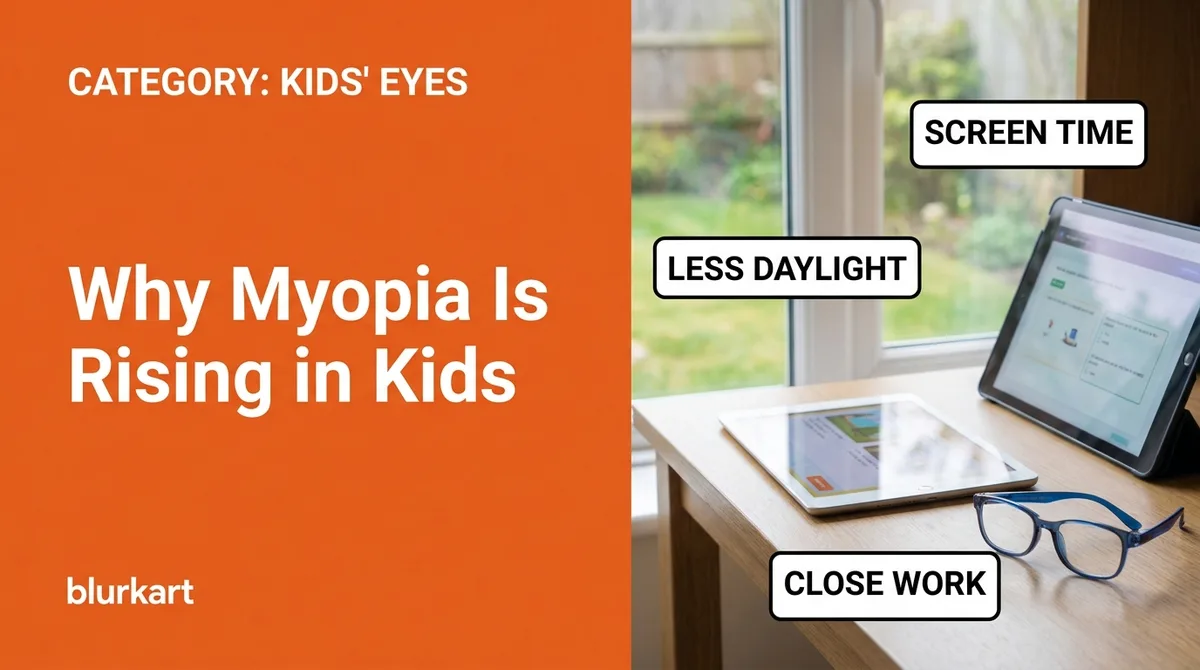
It is not your imagination
If it feels like far more children wear glasses today than when you were at school, you are right. Childhood myopia has been rising across urban Asia for years, and Nepal's cities are following the same curve. Understanding why helps you act, rather than simply accepting a stronger prescription every year.
The two big drivers
1. More close work
Children today spend far more hours in sustained close focus: textbooks, tuition, homework and, increasingly, phones and tablets. Holding the eyes at a near distance for hours on end is associated with faster eye growth, which is what produces myopia.
2. Less daylight
At the same time, outdoor play has shrunk. Packed study schedules, urban living and screen entertainment keep children indoors, and indoor light is many times dimmer than daylight. That loss of bright natural light removes one of the eye's natural brakes on growth.
It is the combination that bites: long hours of close focus, with too little bright daylight to balance it.
What is, and is not, to blame
| Often blamed | Closer to the truth |
|---|---|
| Screens alone | Close work plus lack of daylight together |
| Reading in dim light | Chronic near focus and little outdoor time |
| Wrong glasses last year | Normal growth-driven progression |
| Watching TV too close | Often a symptom of existing myopia, not the cause |
Family history matters too
Genetics play a real part. A child with one or both parents who are myopic is more likely to become myopic, and often earlier. You cannot change that, but it is a strong reason to start good habits and regular eye tests sooner rather than later.
What parents can actually do
- Protect daylight: aim for two hours outdoors a day.
- Balance close work: use the 20-20-20 rule and arm's-length screens.
- Test early and yearly: catch myopia and track its speed.
- Ask about myopia control if the power is rising fast.
The hopeful part
The same trend that pushed myopia up also points to the fixes. None of them are exotic: daylight, balanced study, early detection, and modern control options when needed. You may not be able to stop your child needing glasses, but you can often slow how strong those glasses become, and that is a goal worth taking seriously in Nepal today.
City and rural Nepal are not the same
Myopia tends to rise fastest where study pressure is highest and outdoor time lowest, which is why urban, exam-focused children are often most affected. Rural children who spend more of the day outdoors may be somewhat protected, though growing screen use is narrowing that gap. The lesson is not about geography but about balance: wherever you live, the mix of heavy close work and little daylight is what drives the trend, and that mix is now common across the country.
When to book the first eye test
Do not wait for a complaint. A first eye test around the start of school, then yearly, catches myopia early and lets you track its speed. Book sooner if your child squints, sits close to the board or TV, holds books very near, gets headaches, or if myopia runs in the family. Early detection does not just sharpen schoolwork; it opens the window for myopia control while the eye is still growing, which is exactly when slowing progression pays off most.
Frequently asked
- Are screens the main cause of childhood myopia?
- Screens contribute as intense close work, but reduced time outdoors in daylight is just as important. It is the combination of long close focus and little bright natural light that drives the rise, not screens alone.
- At what age does childhood myopia usually start?
- It commonly appears during the school years and progresses fastest between roughly ages 7 and 12, while the eye is still growing. This is why regular eye tests during school matter.
- Can I prevent my child from becoming myopic?
- You cannot guarantee prevention, especially if both parents are myopic, but more daylight and sensible close-work habits can delay onset and slow progression. Early detection also keeps it manageable.
- How do I know if my child is becoming near-sighted?
- Watch for squinting, sitting close to the TV or board, holding books very near, headaches, or complaints that the board is blurry. Any of these warrants an eye test.
- Is rising power something to worry about?
- A steadily rising power is worth managing, because higher adult myopia carries greater long-term eye-health risks. The good news is that progression can often be slowed with the right steps.