
ZEISS BlueGuard vs BlueProtect: Blue Light Lenses Explained
ZEISS BlueGuard puts blue light blocking into the lens material itself, blocking up to 40% of blue light between 400 and 455 nm. Compared with the DuraVision BlueProtect coating, ZEISS says it gives up to 50% fewer reflections of digital blue light. Evidence that blue light lenses reduce eye strain is mixed, so choose them as a preference, not a cure.
Quick answer
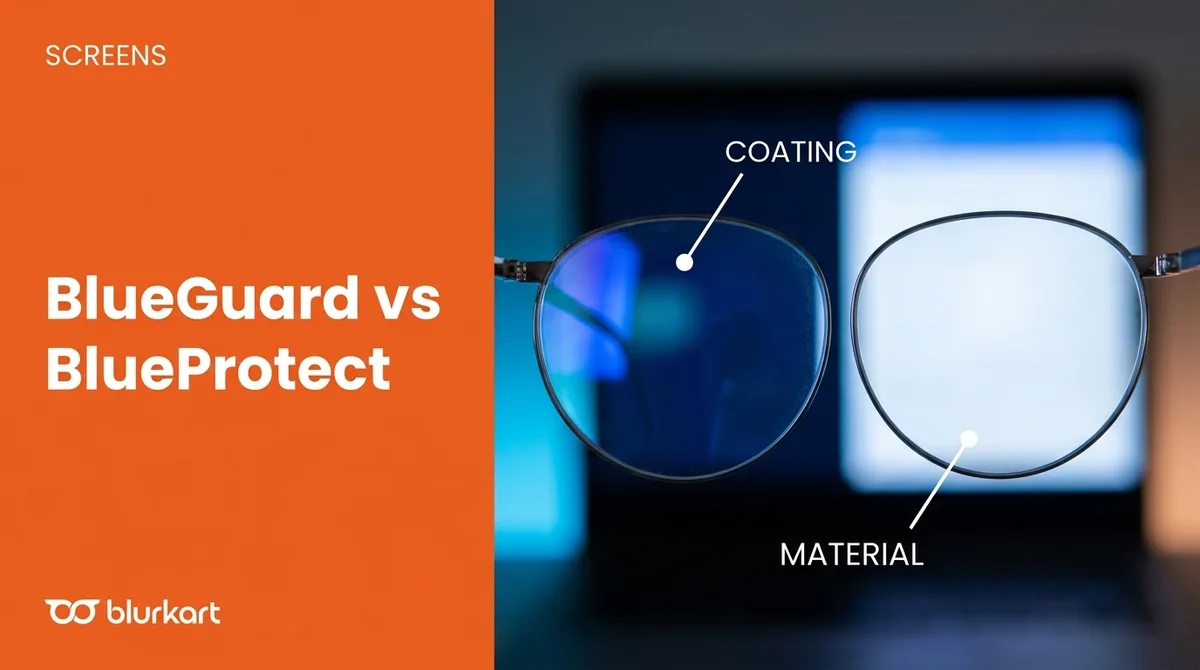
ZEISS BlueGuard blocks blue light inside the lens material, while DuraVision BlueProtect does it with a coating. ZEISS says BlueGuard blocks up to 40% of blue light in the 400 to 455 nm range and shows up to 50% fewer digital blue light reflections.
Blue light glasses are everywhere, and so is confusion about them. If you are considering ZEISS's options, the most important thing to understand is the difference between a coating and a material.
Two ways to block blue light
| DuraVision BlueProtect | BlueGuard | |
|---|---|---|
| How it works | A coating on the lens surface | Built into the lens material |
| Reflections | Can show a visible blue-ish reflection | Up to 50% fewer digital blue light reflections, per ZEISS |
| Blocked range | Blue-violet light | Up to 40% of blue light, 400 to 455 nm |
| Coating | It is the coating | DuraVision Platinum UV included, per ZEISS |
Why material blocking matters
Coatings that reflect blue light can produce a noticeable blue or purple glint, which some wearers dislike, especially on video calls and in photos. Because BlueGuard builds the filtering into the chemistry of the lens, no reflective blue layer is needed, so reflections are reduced and the lens looks clearer.
What BlueGuard filters and what it keeps
ZEISS designed BlueGuard to partially block blue-violet light between 400 and 455 nm, while allowing longer blue wavelengths to pass. The reason is that some blue light, especially around 470 to 500 nm, is considered important for natural body rhythms and visual function. The lens is built on ZEISS UVProtect, so it also blocks UV up to 400 nm.
Do you need blue light lenses?
An honest answer: it depends. Scientific discussion about blue light hazards continues, and studies on whether blue light lenses reduce digital eye strain are mixed. Most eye strain comes from long periods of near focus, reduced blinking and poor lighting. If you spend long hours on screens, small habits help most: the 20-20-20 rule, screen distance, brightness and regular eye tests.
That said, many people like BlueGuard for the built-in protection without reflection, especially because it is available across a wide range of ZEISS lenses and is suitable for all ages.
Where it can be combined
- With SmartLife single vision, digital and progressive lenses.
- As the base of ZEISS PhotoFusion X self-tinting lenses.
- For children, with ZEISS myopia lens products.
Want to compare a BlueGuard lens against a standard lens in your own frame? Book a free eye test at Blurkart.
Figures are reported by ZEISS. This article is not medical advice.
Frequently asked
- What is the difference between BlueGuard and BlueProtect?
- BlueProtect is an anti-reflective coating that reflects part of the blue light. BlueGuard builds the blue light blocking into the chemical make-up of the lens material, so there is less visible reflection.
- How much blue light does BlueGuard block?
- ZEISS says up to 40% of potentially harmful blue light between 400 and 455 nm, while letting longer wavelengths through.
- Does BlueGuard change how colours look?
- ZEISS designs it to keep light transmission high and lens clarity good. Strong blue light filtering can tint a lens, which is one reason it blocks only part of the spectrum.
- Do blue light glasses really reduce eye strain?
- Research is mixed. Digital eye strain is more commonly linked to long near focus, reduced blinking and poor lighting than to blue light alone. Take regular screen breaks regardless of the lens you choose.
- Can I get BlueGuard in progressive and kids lenses?
- ZEISS says BlueGuard is available across its range of clear plastic lenses, including single vision, progressive and myopia lens products, and is suitable for all ages.