
ZEISS SmartLife Young: Lenses Designed for Growing Eyes
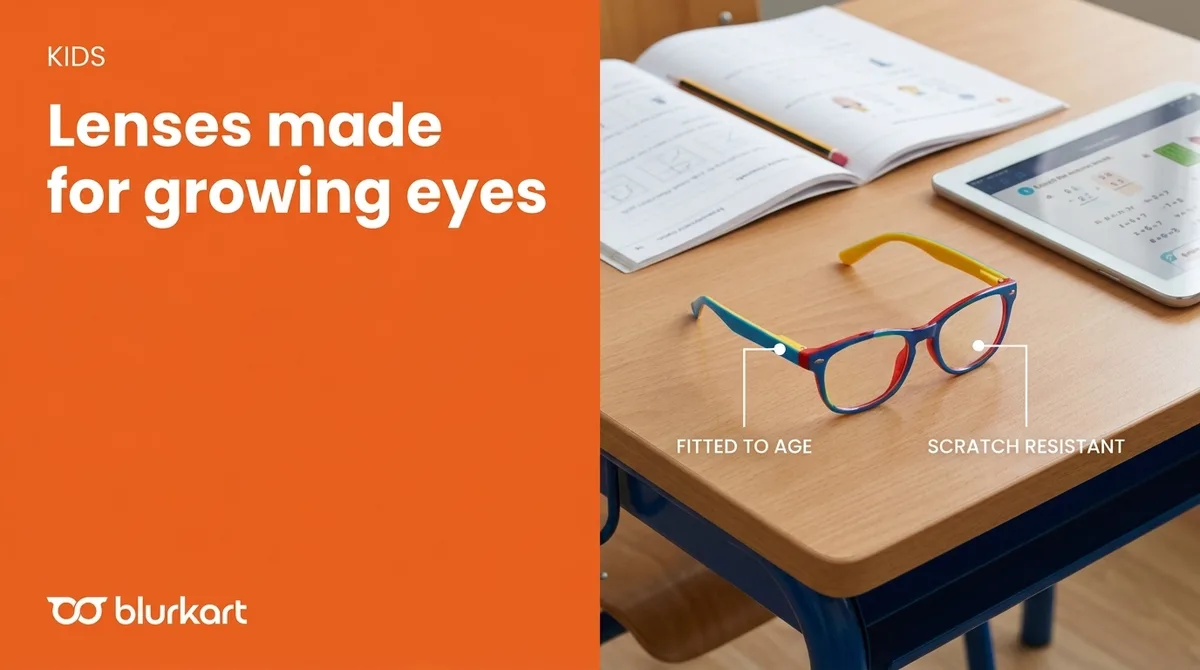
ZEISS SmartLife Young single vision lenses are designed for children and young people aged about 6 to 19. Dynamic AgeFit adapts the lens to age-specific face anatomy, and Luminance Design 2.0 accounts for changing pupil size. They include full UV protection and a scratch-resistant finish.
Quick answer
ZEISS SmartLife Young lenses are single vision lenses designed specifically for children and young people from about 6 to 19. They adapt to the changing shape of a child's face and the changing size of their pupils.
Many children's glasses use lenses designed for adults, simply fitted into a smaller frame. But children's eyes, faces and habits are different. They hold phones and tablets closer, their faces are smaller and change quickly, and their pupils are larger and shift in size as they grow. ZEISS SmartLife Young is designed with these differences in mind.
What makes a children's lens different
Dynamic AgeFit
ZEISS Dynamic AgeFit uses age-specific wearing data, including how a child's facial anatomy changes, so the lens is optimised for a typical child at each age between 6 and 19, not for an adult.
Luminance Design 2.0
Pupil diameter increases until about the age of 20. Luminance Design 2.0 takes the wearer's age-related pupil size into account, to give the best possible optical performance in everyday lighting.
A model of how children look at things
ZEISS uses a dynamic near-object model that considers typical viewing distances for a child's age. For handheld devices, that is roughly 20 to 30 cm depending on age, which is closer than most adults hold a phone.
Built to survive childhood
- Scratch resistance: ZEISS says the lenses are robust and scratch resistant, and can be paired with its DuraVision Kids coating.
- UV protection: full UV protection up to 400 nm is included in ZEISS SmartLife lenses.
- Optional extras: BlueGuard and PhotoFusion X are available for children who spend a lot of time on screens or outdoors.
When SmartLife Young is not enough
SmartLife Young corrects vision, but it does not aim to slow the progression of short-sightedness. If your child's myopia is increasing quickly, speak with an eye care professional about myopia management, which may include ZEISS MyoCare lenses, low-dose atropine or other options. We cover MyoCare in a separate guide.
Tips for parents
- Choose a frame that fits properly. A lens cannot perform well in a frame that slides or sits crooked.
- Ask for accurate measurements, especially pupillary distance and fitting height, for your child's age.
- Book regular eye tests. Prescriptions can change quickly in school years.
- Watch for signs: squinting, headaches, sitting too close to the TV or struggling to see the board.
Bring your child in for a free eye test at Blurkart and we will help you choose.
Information is based on ZEISS product information. This article is not medical advice; see an eye care professional for your child's needs.
Frequently asked
- What age are ZEISS SmartLife Young lenses for?
- ZEISS recommends them for children and young adults from about 6 to 19 years old.
- What is Dynamic AgeFit?
- It is a ZEISS technology that uses age-specific wearing parameters, such as the distance between the pupils, so the lens is calculated for the typical anatomy of a child at each age from 6 to 19.
- Why does pupil size matter in children's lenses?
- Pupil diameter grows until around age 20, and it affects optical performance in different lighting. ZEISS Luminance Design 2.0 takes age-related pupil size into account.
- Are they suitable for children with myopia that is getting worse?
- SmartLife Young corrects vision but is not a myopia management lens. For slowing progression, ZEISS offers MyoCare lenses, which should be discussed with an eye care professional.
- How often should children's glasses be checked?
- Children's eyes change as they grow, so regular eye tests are important, and a sooner check is wise if your child squints, sits close to screens or struggles to see the board.